
How to cut thick electrical cable safely comes down to two things: making sure the circuit is truly de-energized, and using a cutter that matches the cable’s gauge and construction so you don’t crush strands or damage insulation.
If you have ever fought through a thick feeder cable with the wrong tool, you know the results, a jagged end, flattened conductors, and a termination that never feels quite right. With high-current cable, those “small” mistakes can turn into heat, arcing, or a connection that fails inspection.

This guide keeps it practical: what usually goes wrong, how to quickly judge your cable type, which cutters are appropriate, and a step-by-step method that leaves a clean end for stripping and termination. I’ll also call out the points where a licensed electrician is the safer choice.
Why thick cable cutting goes wrong (and why it matters)
Thick electrical cable is less forgiving than small branch wiring, mostly because the conductors carry more current and the jacket systems tend to be tougher. A “close enough” cut can still create downstream problems.
- Crushed strands from using pliers, bolt cutters, or undersized cutters, which reduces effective cross-section and can increase heat at the lug.
- Nick or score marks in copper or aluminum, which can become stress points, especially when you bend the conductor into a panel or enclosure.
- Split insulation near the cut, often caused by twisting or forcing dull blades through thick jackets.
- Hidden energization risk when people trust a breaker label or assume a cable is dead because a device “doesn’t turn on.”
According to OSHA, controlling hazardous energy with lockout/tagout practices helps prevent unexpected energization during servicing and maintenance, which is exactly the kind of scenario cable cutting can fall into when circuits get mislabeled or backfed.
Quick self-check: what kind of “thick cable” are you dealing with?
Before you pick a tool, you need a rough read on construction. You don’t need to be a cable engineer, just answer these questions honestly.
Fast identification checklist
- Is it single-conductor or multi-conductor? Single-conductor feeders are common in conduit; multi-conductor might be SER/SEU or tray cable.
- Copper or aluminum? Aluminum often feels lighter for the size and is more prone to surface scoring; terminations are more sensitive to prep quality.
- Flexible fine-strand or standard strand? Welding cable or fine-strand flex needs different stripping and termination methods; cutting should avoid “fanning” strands.
- Armored or non-armored? MC/AC or other armored types may require a rotary armored-cable cutter rather than brute force.
- Approximate gauge / kcmil? Read the jacket print if available; it usually lists AWG/kcmil, insulation type, and ratings.
If the jacket markings are unreadable and the cable is part of a building system, slow down. In many situations, confirming cable type and ratings is worth a quick call to a qualified electrician, especially if aluminum or unusual insulation is involved.
Tools that actually work (and what to avoid)
For how to cut thick electrical cable safely, the “right tool” is not a luxury, it’s what prevents crushed conductors and runaway effort. Match the cutter to the diameter and construction.
| Tool | Best for | Pros | Watch-outs |
|---|---|---|---|
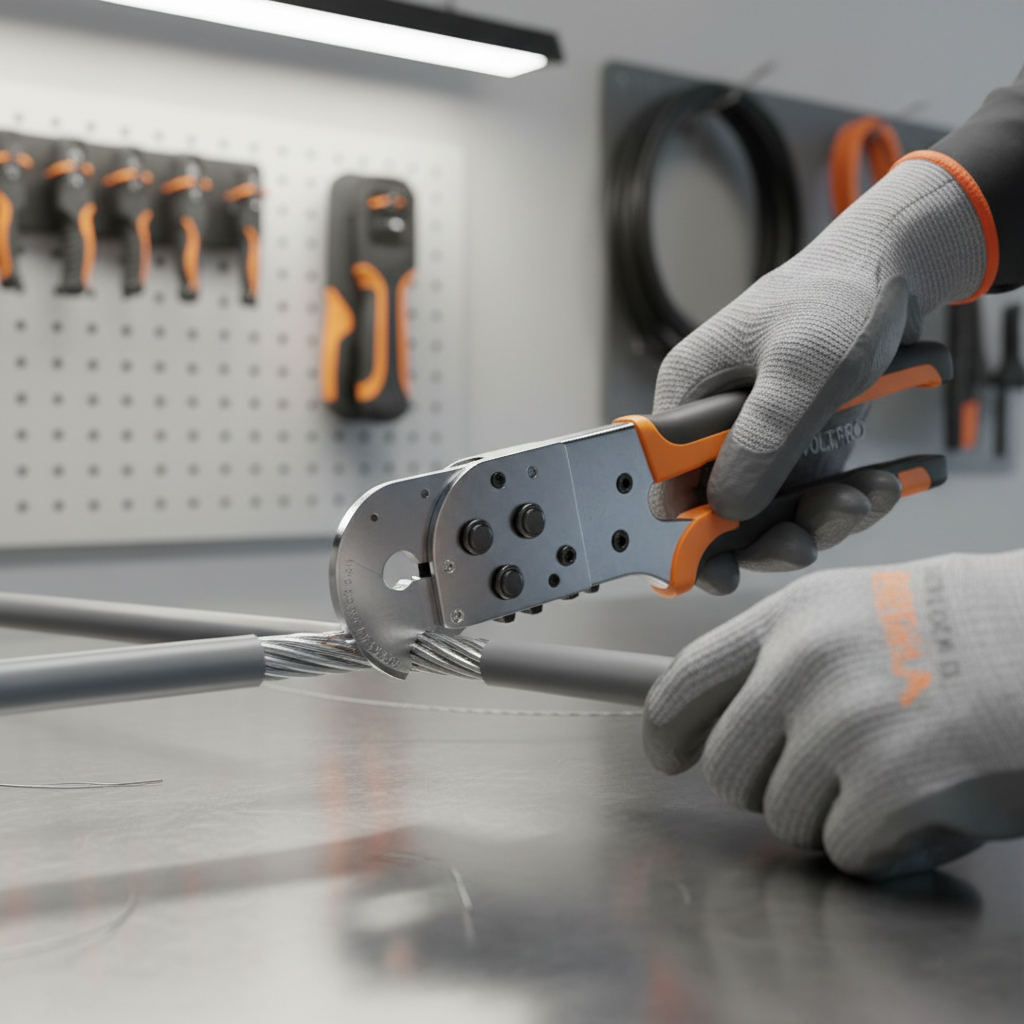
| Ratchet cable cutter | Large copper/aluminum conductors, standard strand | Controlled pressure, clean cut, portable | Must be rated for your gauge; dull blades crush |
| Hydraulic cable cutter | Very large gauge / kcmil, frequent cuts | Effortless, consistent cuts | More setup, higher cost, needs maintenance |
| Rotary armored cable cutter | MC/AC and some armored cables | Reduces risk of nicking conductors | Not for bare large conductors; needs practice |
| Hacksaw / recip saw (only in some cases) | Conduit/armor work, not ideal for conductors | Accessible tools | Higher nick risk, metal filings, unstable cuts |
Tools to avoid for conductor cutting include standard diagonal cutters, lineman’s pliers, and generic bolt cutters. They may “get through,” but the cut quality often looks like a crushed oval instead of a clean circle, and that’s where terminations start going sideways.
Safety prep: de-energize, verify, and set up the cut
Most accidents around cable cutting are not about “technique,” they’re about assumptions. This is the boring part, and it’s also the part that keeps people out of the ER.
De-energize and verify (don’t skip the verification)
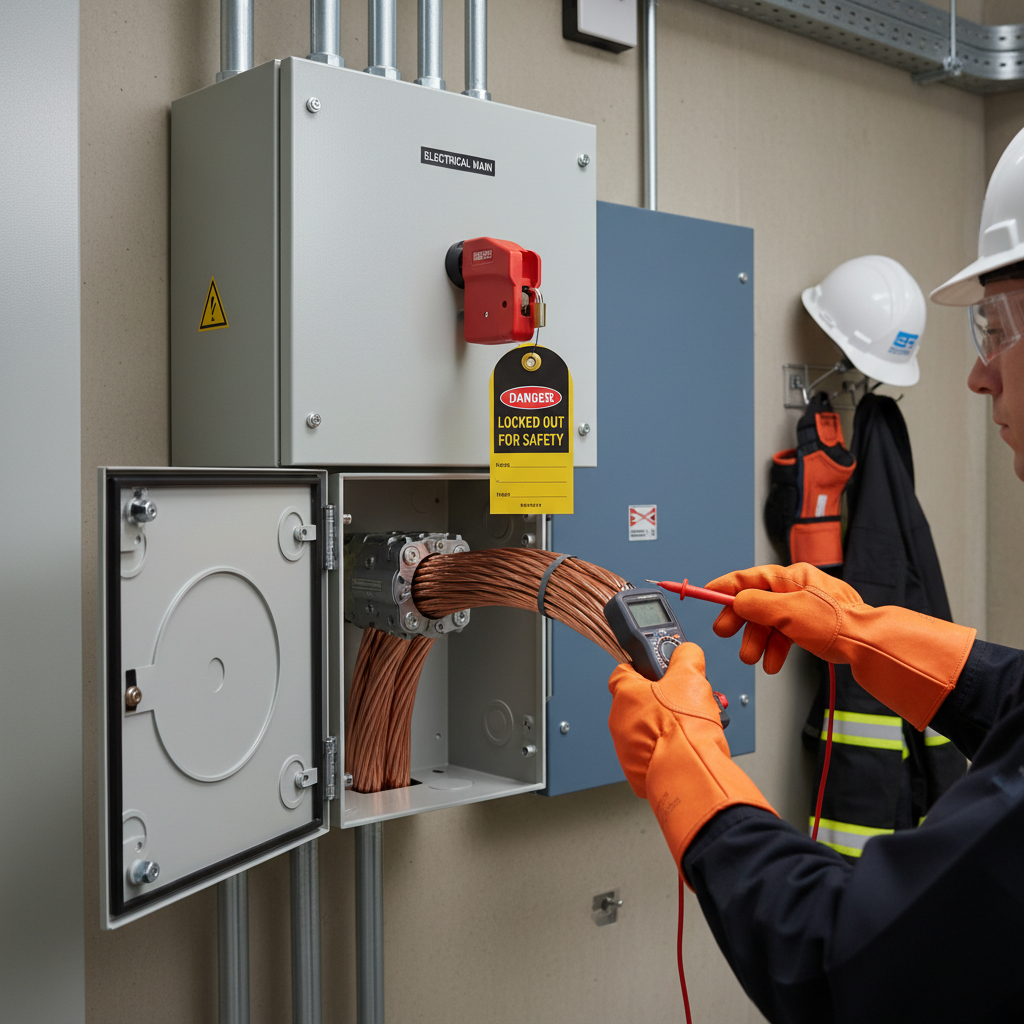
- Turn off the correct disconnect and apply lockout/tagout if the setting calls for it.
- Verify with a properly rated tester on a known live source, then test the cable, then re-test on the known live source. This helps confirm your tester works.
- Check for backfeed from generators, PV inverters, multi-wire circuits, or shared neutrals, common “surprises” in real buildings.
According to NFPA, verifying absence of voltage is a core step in establishing an electrically safe work condition; if you’re not confident in test methods or PPE requirements, a licensed electrician is the safer route.
Set up a stable cut
- Support the cable so it doesn’t whip or drop when the cut finishes.
- Give yourself room to keep the cutter square to the conductor.
- Wear eye protection, and consider cut-resistant gloves for large, stiff jackets.
- If the cable is in a panel or cramped enclosure, consider pulling extra slack before cutting, when feasible and permitted.
Step-by-step: clean cuts on thick copper or aluminum conductors
This is the part people rush, then regret when the lug won’t seat cleanly. Go for a controlled, perpendicular cut.
1) Mark and inspect the cut point
- Pick a section with intact insulation and no visible kinks.
- Mark the cut so you keep enough length for stripping and routing.
2) Choose blade position and keep it square
- Open the cutter fully and seat the cable deep into the jaws.
- Align the blades perpendicular to the cable, not at a bias angle.
3) Cut with steady pressure, don’t twist
- Use the ratchet or hydraulic action to finish the cut in one controlled motion.
- If resistance feels uneven, stop and check alignment; forcing often creates a wedge-shaped cut.
4) Inspect the end immediately
- Look for flattened strands, gouges, or insulation tearing back from the cut.
- If the end looks crushed, cut back to clean material rather than “making it work.”
If you’re cutting aluminum, be extra picky. Minor scoring can matter more than people expect, and good terminations depend on clean, undamaged conductor surfaces.
Special cases: armored cable, fine-strand, and big feeders
Not all thick cable behaves the same, and this is where many DIY guides oversimplify.
Armored cable (MC/AC)
- Use a rotary armored-cable cutter when possible, it reduces the chance of nicking insulation.
- After cutting armor, inspect the conductors and install any required anti-short bushing.
Fine-strand flexible cable
- Use a cutter designed for fine-strand, so strands don’t flare or fold over.
- Plan ahead for termination hardware compatible with fine-strand conductors, many lugs and set-screw terminals have limitations.
Large feeders (very thick kcmil)
- Hydraulic cutters are often the difference between a clean result and a compromised end.
- Consider whether the cable can be cut in place safely; moving it for a stable cut sometimes reduces risk.
Common mistakes and how to avoid rework
If you want fewer do-overs, focus on the “boring” details that usually cause failures at termination time.
- Mistake: Cutting too close to a bend or kink. Fix: Cut back to straight cable so the conductor seats evenly in the lug.
- Mistake: Using a dull cutter. Fix: Replace or sharpen blades per manufacturer guidance; dull blades crush more than they cut.
- Mistake: “Sawing” through conductors. Fix: Use purpose-built cable cutters; sawing introduces nicks and metal debris.
- Mistake: Skipping post-cut inspection. Fix: Check for deformation immediately and recut if needed.
- Mistake: Treating aluminum like copper. Fix: Handle more gently, and follow connector manufacturer requirements for prep and compound where applicable.
When to stop and call a licensed electrician
How to cut thick electrical cable safely sometimes means deciding not to cut it yourself. In the U.S., local code requirements and jobsite rules can also limit what’s appropriate for a homeowner or unlicensed person.
- You cannot confidently verify the circuit is de-energized, or you suspect backfeed.
- The cable is a service entrance conductor, feeder to a main panel, or part of critical equipment.
- You see signs of overheating, damaged insulation, corrosion, or arcing near the area you plan to cut.
- The job requires working inside live panels or near exposed energized parts; that often calls for specific training and PPE.
- You’re dealing with large aluminum conductors and unfamiliar termination requirements, mistakes can become expensive quickly.
According to the National Electrical Code (NFPA 70), wiring and equipment must be installed in a safe and workmanlike manner; if you’re unsure what “workmanlike” looks like for your exact cable and connectors, professional help is usually money well spent.
Key takeaways for a clean, safe cut
- Verify de-energized status with a proper test method, not labels or guesses.
- Match the cutter to the gauge and cable construction, thick conductors punish the wrong tool.
- Cut square, don’t twist, and inspect the end right away.
- Recut if needed; a compromised end can create termination issues later.
- Call a pro when the circuit is critical, unclear, or involves service equipment.
If you want one practical next step, read the jacket markings, confirm the conductor size, and pick a cutter rated for that range, then do a slow verification before any blade touches the cable. That combination prevents most “I wish I hadn’t” moments.
FAQ
- What is the safest tool for cutting thick electrical cable?
In many cases, a ratchet cable cutter rated for the cable gauge is a safe, controlled choice. For very large feeders, a hydraulic cutter tends to give cleaner results with less forcing. - Can I use bolt cutters to cut thick wire?
It might work mechanically, but bolt cutters often crush strands and deform the conductor. If the cable will be terminated in a lug, that deformation can create fit and heat issues, so purpose-built cable cutters are usually the better call. - How do I know the cable is really off before I cut?
Use a properly rated voltage tester and verify it on a known live source, test the conductors, then verify again on the known live source. If you suspect backfeed from a generator or solar, consider professional help. - Is cutting aluminum cable different from copper?
The cut process is similar, but aluminum is more sensitive to scoring and deformation. You want a cleaner, more controlled cut and a careful inspection before stripping and termination. - How do I cut armored cable without nicking the wires?
A rotary armored-cable cutter is designed to score the armor without digging into conductor insulation. After the cut, inspect insulation and use the required anti-short bushing when applicable. - Why does my cut end look oval or smashed?
That usually means the cutter is undersized, dull, or misaligned, or the tool is not meant for cable conductors. Cutting back and using a properly rated ratchet or hydraulic cutter typically fixes it. - Do I need to deburr or file the conductor after cutting?
If the cut is clean with the right tool, you typically won’t need filing, and filing can introduce scratches. If you see burrs or sharp edges, it may be better to recut cleanly rather than grind.
If you’re trying to cut thick electrical cable safely for a panel upgrade, EV charger, generator, or subpanel run, and you want a cleaner result without trial-and-error, it may help to bring the cable specs and a photo of the existing setup to a licensed electrician or an electrical supply house counter, they can usually point you toward the correct cutter and termination approach for your exact cable type.