
Chalk line reel for layout is one of those tools that looks simple, until your line snaps faint, drifts, or disappears halfway through a job and suddenly your “quick layout” becomes rework.
If you do framing, siding, roofing, drywall, tile, or concrete formwork, a reliable reel saves time because your marks stay readable, straight, and consistent across long runs. The small choices matter, line type, chalk type, tension, even how you hold the hook.

Most layout problems are predictable, the reel is underfilled, the wrong chalk is used for the surface, or the string is worn and won’t “carry” pigment. Fix those, and the tool becomes boring again, which is exactly what you want.
According to OSHA, clear markings and good housekeeping help reduce trip hazards and mistakes on active job sites. A clean, legible layout line is not a safety system by itself, but it often prevents the sloppy “guess-and-cut” behavior that creates avoidable risk.
What a chalk line reel actually does on real jobs
A reel does two jobs at once, it stores a string under tension, and it coats that string with pigment so you can transfer a straight reference line to a surface. When the line snaps clean, it gives you a fast baseline for cuts, fastener rows, stud locations, or control joints.
In the field, you’re usually asking it to do more than “draw a line,” you want repeatability. If the mark fades after one pass, or the line curves because the string stretches, you lose confidence and start double-checking everything.
- Framing: long plates, sheathing edges, stair layout, rafter tails
- Drywall and ceilings: track lines, grid references, lighting alignment
- Tile: control lines and square references, often with finer chalk
- Roofing/siding: straight courses, reveal lines, starter alignment
Why chalk lines look bad: the causes people don’t notice
When the chalk line reel for layout disappoints, it’s usually not a “bad reel,” it’s a mismatch between reel setup and job conditions.
String issues: fraying, glazing, or stretch
A fuzzy string can dump too much chalk at the start and then go weak, a glazed string can do the opposite and barely mark. If the string stretches, your snapped line can shift slightly, especially on long spans.
Chalk choice: visibility vs permanence
Some chalks are designed to wash off, others are designed to resist weather. Using the wrong one creates frustration, either your line disappears fast, or it stains a finish surface and becomes someone else’s problem later.
Moisture and surface texture
Wet concrete, dusty slab, oily steel, rough OSB, each surface grabs pigment differently. On rough materials, the line can look “broken” even when it’s straight, because the pigment lands on peaks and misses valleys.
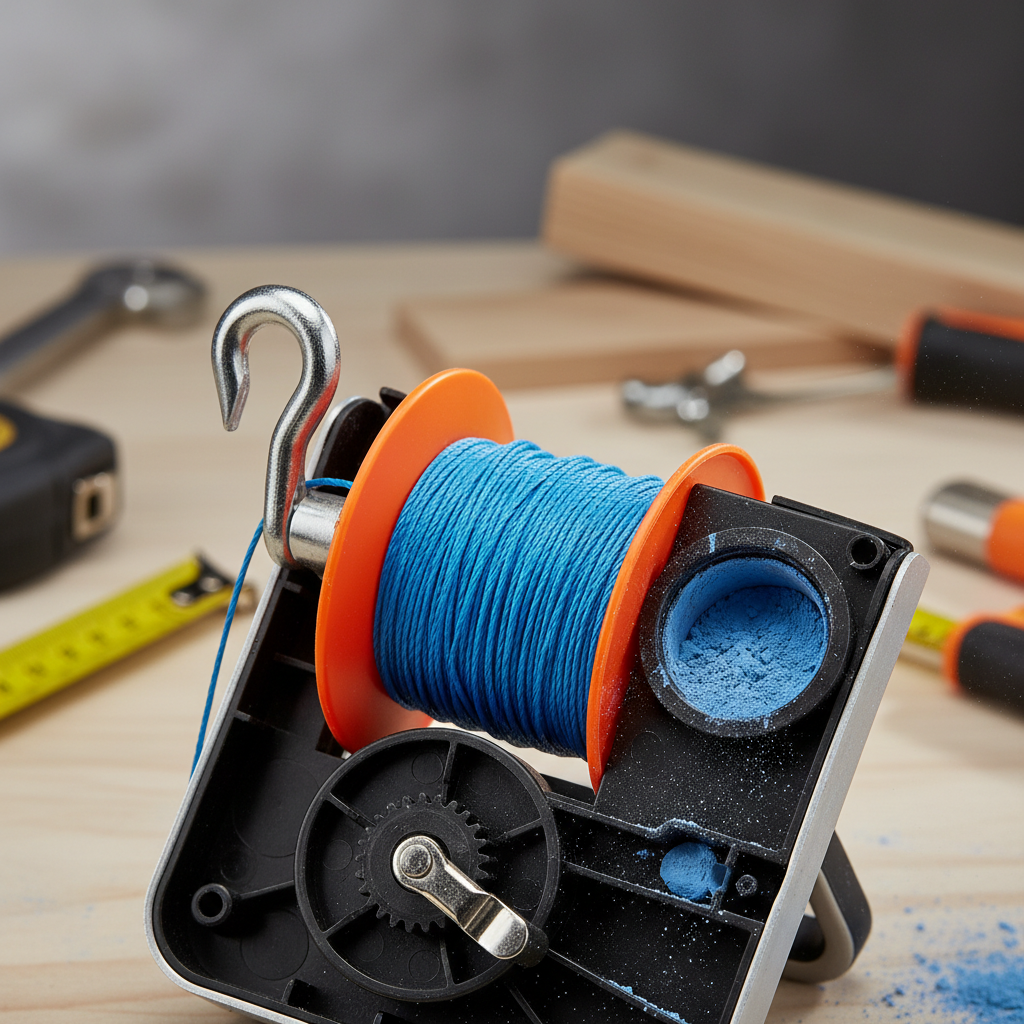
Technique problems: snap angle and tension
Many faint lines come from snapping with slack. Pull the string taut, lift it slightly, and snap with a controlled release. If you yank upward too aggressively, the hook can creep, especially on smooth edges.
Quick self-check: are you using the right setup?
If you want a fast diagnosis before buying anything, run this checklist on your current reel.
- Line looks dusty and wide: too much chalk in the housing or a very fuzzy string
- Line is faint: underfilled, chalk caked inside, string glazed, or surface too wet
- Line curves over distance: string stretch, hook slipping, or line not tensioned
- Hook pops off when snapping: weak anchor point, wrong hook technique, or sharp edge cutting into the hook
- Chalk clumps in reel: moisture intrusion, lid not sealing, or storing in humid conditions
Key takeaway: if the reel body feels fine and the crank is smooth, a new string and better chalk often fix 80% of “bad snap” complaints.
How to choose a chalk line reel for layout (without overbuying)
You’re usually deciding between durability, speed, and how clean the line needs to be. The “best” option depends on trade and jobsite reality.
Reel body and durability
Look for a housing that seals reasonably well and survives drops. On busy sites, fine chalk dust gets everywhere, so a reel that opens easily for cleaning is more helpful than a reel with flashy features.
Gear ratio and rewind feel
Fast rewind saves time on repetitive work, but it can also tangle easier if you let the string go slack. If you train your hands to keep light tension during rewind, higher speed becomes a win.
String material and thickness
Thicker string can snap a more visible line on rough surfaces, but it also creates a wider mark, which is not ideal for finish layout. For tile or cabinetry, many crews prefer a finer line and tighter technique.
Chalk compatibility and color
Blue is common for general layout because it’s visible and often easier to clean, red can be more permanent, black shows up on light surfaces, and specialty chalks exist for specific materials. Before using “permanent” colors on finish-facing surfaces, confirm the spec or ask the GC, because removal can be annoying.
Practical setup and use: cleaner snaps in 5 minutes
This is the part most people skip because it feels basic, but it’s where good lines come from.
Fill it correctly (and avoid the clump trap)
- Keep the reel dry, if the chalk has absorbed moisture, it tends to cake
- Fill to a sensible level, overfilling can choke the string path and dump chalk
- After filling, pull out a few feet and rewind to distribute pigment evenly
Use a stable anchor
On sheet goods, a helper’s finger on the hook works, but a nail, screw, or edge notch is more consistent. If the surface is delicate, consider a temporary tape anchor so you don’t mar it.
Snap technique that stays straight
- Pull the string tight and keep it slightly off the surface
- Lift the center an inch or two, then release for a crisp snap
- For long runs, do a mid-span press check to confirm the string sits where you expect
If you’re snapping lines near power tools, treat chalk lines as layout references, not a substitute for measuring critical clearances. When precision matters, confirm with a tape, square, or laser.
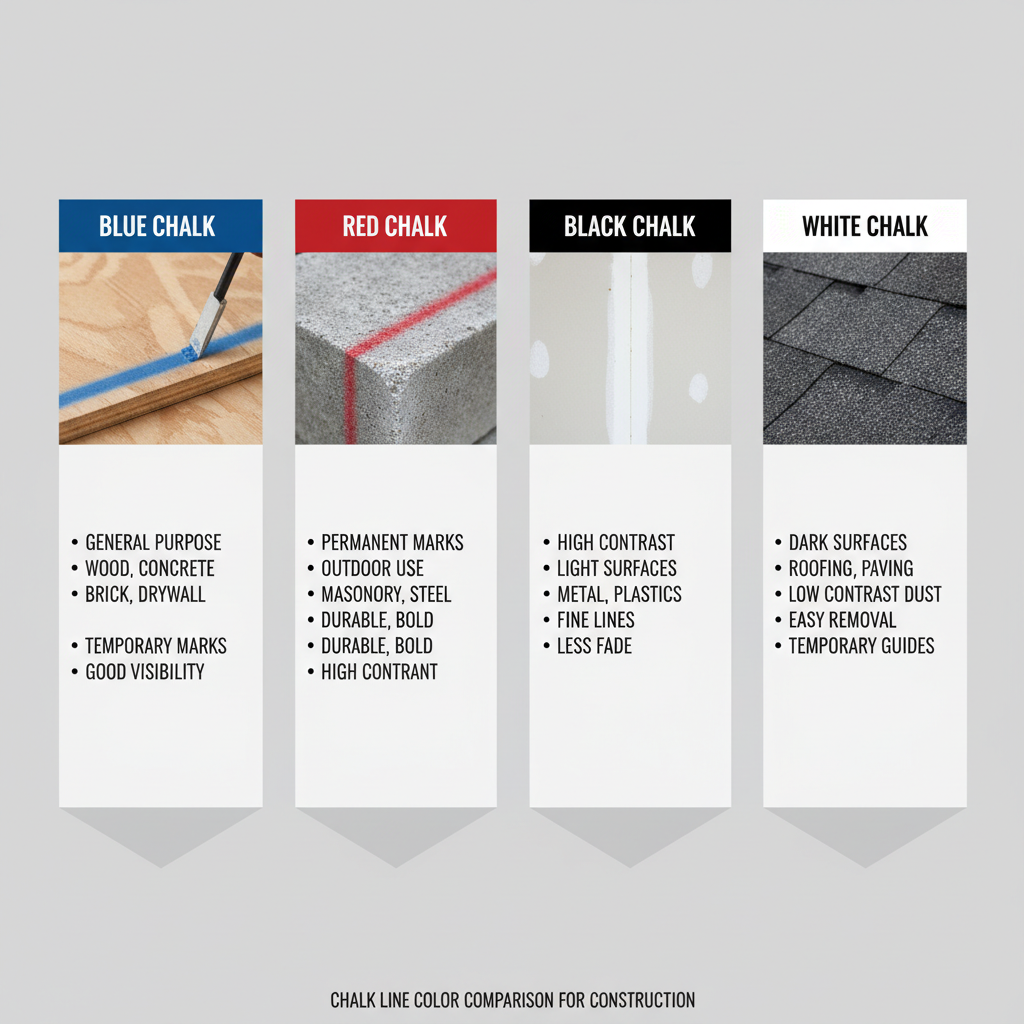
Chalk color and job conditions: a simple comparison table
Color choices vary by brand and job specs, but this table matches how many crews think about it in practice.
| Chalk color | Typical use | Pros | Watch-outs |
|---|---|---|---|
| Blue | General construction layout | Good visibility, often easier to remove | Can fade outdoors or on damp surfaces |
| Red | Exterior work, longer-lasting marks | Holds up better in weather | May stain porous or finish surfaces |
| Black | Light materials, bright concrete | Strong contrast in many interiors | Mess shows easily, cleanup can take effort |
| White | Dark surfaces, roofing underlayment | Visible where blue/black disappear | May not pop on dusty light substrates |
Mistakes that waste time (and how to avoid them)
- Snapping on dusty surfaces: quick broom or blow-off often makes the line twice as readable
- Storing the reel in a wet truck box: moisture turns chalk into paste, keep it sealed and dry
- Assuming “more chalk = better”: heavy coating can create fat, fuzzy lines that hurt accuracy
- Using permanent chalk on finish work: if you’re not sure, test a small area or confirm requirements
- Ignoring the hook: a bent or worn hook causes drift, replace it if it won’t seat clean
According to NIOSH, airborne dust can be a jobsite hazard. Chalk dust is not the same as silica, but keeping dust down and wearing appropriate PPE when needed is still a reasonable habit, especially in enclosed areas. If your site has a safety plan, follow it.
When it’s worth getting more help or switching tools
If your layout drives critical tolerances, think door and window alignment, tile centers, cabinet runs, specialty concrete work, a chalk line might not be the only reference you want. Pair it with a laser, a straightedge, or story poles so you can verify before cutting.
If repeated layout errors keep happening even with good snaps, it may be a workflow issue, who holds the hook, how measurements get transferred, or how corners are squared. In those cases, asking a lead, GC, or experienced installer to review the process for five minutes often saves hours later.
Conclusion: make the reel boring again
A chalk line reel for layout should feel predictable, sharp snap, readable mark, no drama. When your lines look weak or wander, check the string, chalk choice, and tension before replacing the tool.
If you want a simple action plan, refresh the string, use a chalk color that matches the surface and spec, then practice one consistent snapping motion, your layout gets cleaner fast, and your cuts start matching your intent.
FAQ
What’s the best chalk line reel for layout work on framing?
For framing, crews often prioritize durability, a smooth crank, and a string that carries enough pigment on rough lumber and sheathing. A slightly thicker line can be fine if you’re not marking finish cuts.
Why does my chalk line snap look fuzzy instead of crisp?
Usually it’s too much chalk on the string, a very worn string, or snapping with the string dragging on the surface. Reduce chalk load, clean the reel path, and snap with the line held slightly off the surface.
Can I use red chalk for interior layout?
Sometimes, but it depends on the substrate and whether the mark must be removable. Red chalk often holds longer, which is helpful, but it can stain porous materials, so a small test or spec check prevents headaches.
How do I keep chalk from clumping inside the reel?
Keep the reel dry, close the fill cap tightly, and avoid storing it in humid spots. If it already clumps, empty it, brush out residue, and refill with dry chalk.
Is a chalk line accurate enough for tile layout?
It can be, especially for control lines, but tile work often benefits from combining snaps with a square and periodic measurement checks. If the surface is dusty or damp, the line can mislead you.
How often should I replace the chalk line string?
When it frays, glazes, or starts producing inconsistent marks despite good chalk and technique. For heavy daily use, replacement may be fairly regular, lighter use can go much longer.
What’s the difference between a chalk line and a laser line for layout?
A chalk line leaves a physical mark you can work off for hours, while a laser is great for alignment and level/plumb checks without marking. Many crews use both, chalk for the cut/fasten reference, laser for verification.
If you’re choosing a chalk line reel for layout across different materials, or you keep fighting faint snaps on long runs, it may help to standardize one “daily” setup and one “finish-safe” setup, that small bit of consistency often reduces redo work without adding much cost.