Choosing an air blow gun for compressor work sounds simple until you get a weak puff of air, a whistling leak, or a nozzle that kicks dust straight into your face.
If you use compressed air to clean tools, benches, CNC chips, keyboards, shop floors, or HVAC parts, the blow gun matters more than most people think, because it controls flow, safety, and how much air your compressor burns per minute.
This guide breaks down what actually changes performance, how to match a blow gun to your compressor and tasks, and how to use it without turning “cleaning” into a safety problem.
What an air blow gun really does (and why some feel “stronger”)
A blow gun is basically a valve, a handle, and a nozzle, but small design choices change results fast. Two guns at the same compressor pressure can feel totally different because of nozzle geometry, flow restriction, and how the jet entrains surrounding air.
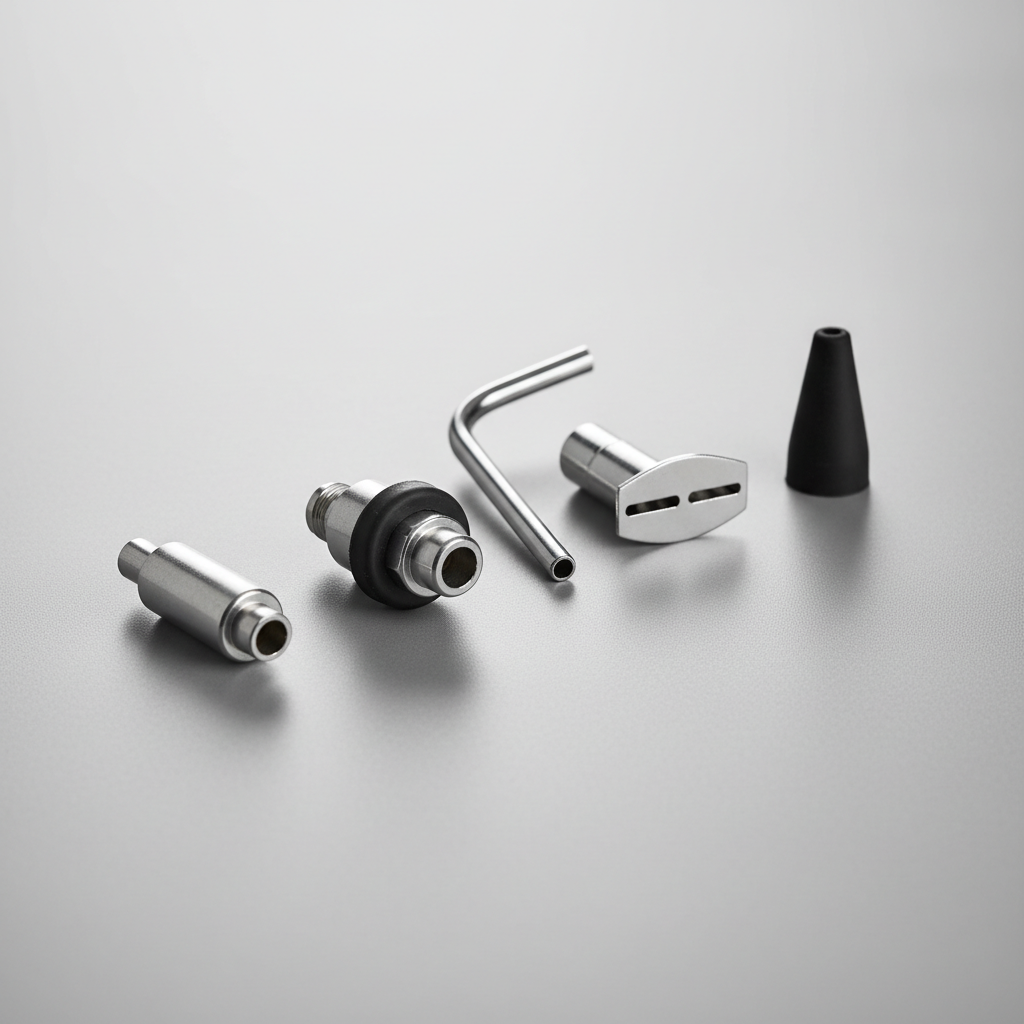
Some tips create a tight, high-velocity stream for stubborn chips. Others spread air in a wider cone for gentle dusting. “Air-amplifying” nozzles can pull in ambient air and move more total air at the surface, which often feels stronger without cranking your regulator.

Also, “stronger” is not always better. In many shops, the better blow gun is the one that clears debris quickly without blasting particles into bearings, electronics, or people nearby.
Common cleaning jobs and the nozzle styles that fit
Most buying mistakes come from using one nozzle style for every job. Here’s a practical mapping that usually works in U.S. garages and light industrial shops.
- Benches, vises, general shop cleanup: standard safety tip or rubber tip for controlled flow.
- Machining chips (CNC/manual): focused tip or extended reach nozzle to keep hands away from sharp swarf.
- Delicate surfaces (keyboards, sensors, small motors): low-flow nozzle, diffuser tip, or a separate small compressor/regulated line.
- Hard-to-reach cavities: long angled nozzle, but only if you can maintain safe distance and line-of-fire control.
- Drying after washdown: wide fan nozzle to move water without “needle jet” splashback.
If you frequently switch between delicate and aggressive cleaning, it’s often cheaper (and safer) to keep two blow guns set up with different tips than to constantly swap attachments.
How to choose the right blow gun for your compressor setup
Before you buy, check three things: your compressor output, your line hardware, and your pressure control. This avoids the classic “my new gun is weak” scenario that’s really a supply issue.
Quick selection checklist
- Compressor capacity: compare your compressor SCFM rating (at 90 PSI is common) to the blow gun’s air consumption if listed.
- Hose and fittings: small ID hoses, long runs, or restrictive quick-connects can choke flow more than the gun itself.
- Regulator placement: a regulator near the point of use gives more consistent control than one at the tank only.
- Nozzle type: safety nozzle vs focused tip vs air-amplifying, match to the jobs above.
- Ergonomics: trigger feel, grip, and weight matter if you clean for more than a minute at a time.
Safety and compliance: what to know before you “just blow it off”
Compressed air can injure skin and eyes, and it can send debris airborne faster than you expect. In many workplaces, there are also rules about compressed air used for cleaning.
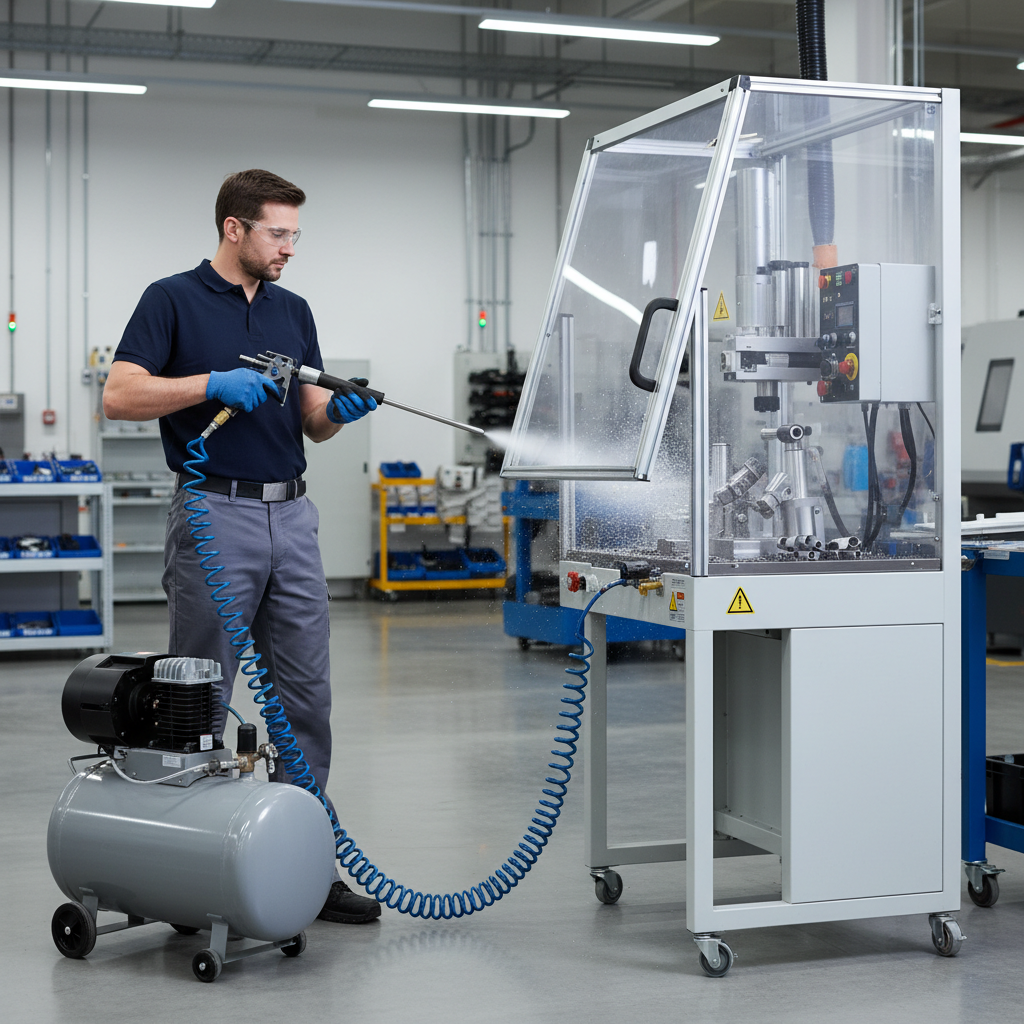
According to OSHA guidance commonly cited for cleaning with compressed air, using compressed air for cleaning is restricted unless reduced to 30 psi and used with effective chip guarding and appropriate PPE. Exact requirements depend on the task and setting, so if you’re in a regulated workplace, confirm your site policy or ask a safety professional.
- Eye protection: safety glasses at minimum, a face shield when chips are involved.
- Never point at skin: even “low pressure” can be dangerous in the wrong circumstances.
- Control the line of fire: blow debris away from people, bearings, open motors, and electronics.
- Use chip guarding: a simple barrier or enclosure reduces ricochet and airborne junk.
If you’re cleaning brake components or unknown dust, be cautious: some dust exposures may be hazardous, and a vacuum or wet method may be more appropriate. When in doubt, it’s reasonable to consult a qualified safety or industrial hygiene professional.
Practical setup tips: stronger cleaning with less air waste
If your air blow gun for compressor use feels underwhelming, most fixes are upstream, not at the nozzle.
What usually helps right away
- Shorten and upsize the hose where possible, especially if you’re on a long 1/4-inch line.
- Upgrade restrictive fittings; some “standard” quick-connects are major bottlenecks.
- Set pressure at the point of use with a local regulator, so you don’t compensate by over-pressurizing the whole system.
- Add a filter/water separator if you see moisture, because wet air turns “blowing off” into “spraying grime.”
- Use bursts, not continuous blasting; it keeps control and reduces compressor cycling.
There’s also a human factor: a smoother trigger with better modulation makes it easier to use less air and still get good results.
Comparison table: picking a blow gun style for cleaning
This table is a quick way to narrow choices without getting lost in marketing terms.
| Blow gun / nozzle type | Best for | Typical trade-offs |
|---|---|---|
| Safety tip (vented) | General cleaning, reduced dead-end pressure risk | May feel less “punchy” than a needle-style tip |
| Focused/conical tip | Stubborn chips, crevices, quick spot cleaning | More blowback, easier to launch debris |
| Extended reach nozzle | Deep cavities, machine interiors, keeping hands away | Can amplify kickback and noise, needs careful control |
| Fan / wide spray nozzle | Drying, wide-area dusting | Less effective on stuck-on debris |
| Air-amplifying nozzle | Moving more air across a surface at moderate pressure | Often pricier, performance varies by design |
Step-by-step: a safer, cleaner routine that works in most shops
This is a simple routine you can adapt whether you’re cleaning a workstation or a machine. The goal is control first, speed second.
- 1) Prep the area: remove loose parts, cover bearings or sensitive openings, set a catch tray or barrier if chips are present.
- 2) Set pressure intentionally: start lower than you think, then increase only if needed for the task.
- 3) Choose the right tip: wide for dust and drying, focused for stuck chips, safety tip when dead-ending is possible.
- 4) Work from clean to dirty: blow debris toward a collection zone, not back across finished surfaces.
- 5) Finish with housekeeping: sweep/vacuum after blowing so dust doesn’t just resettle.
Key takeaways and next steps
The right air blow gun for compressor cleaning is less about chasing maximum blast and more about matching nozzle style to the job, keeping airflow efficient, and staying inside safe cleaning practices.
- Match the nozzle to debris type and surface sensitivity.
- Fix restrictions in hose, fittings, and regulation before blaming the gun.
- Prioritize safety with eye protection, guarding, and controlled pressure.
If you want one action today, start by checking your hose ID and quick-connect style, then pick a safety tip or diffuser setup for everyday cleanup, it’s usually the most noticeable upgrade.
FAQ
What PSI should I use with an air blow gun for compressor cleaning?
It depends on the surface and debris, but many tasks clean well at moderate pressure when flow is not restricted. In workplaces, requirements may apply; according to OSHA guidance commonly referenced for cleaning, compressed air used for cleaning is typically limited to 30 psi with proper guarding and PPE, so confirm what applies to your environment.
Why does my blow gun feel weak even at 90 PSI?
Usually it’s pressure drop from a long or small hose, restrictive quick-connects, or a regulator far from the tool. A nozzle can’t compensate for a starved air supply, so check fittings and hose diameter before you replace the gun.
Are air-amplifying nozzles worth it?
Often they’re useful when you want more sweeping airflow at the surface without turning up pressure, especially for drying and wide-area cleanup. They can cost more, and performance varies by design, so it’s worth checking real specifications like air consumption and intended use.
Can I use a blow gun to clean electronics or a keyboard?
You can, but it’s easy to overdo it. Use low pressure, increase distance, and avoid spinning fans or forcing debris deeper into housings. For sensitive equipment, a purpose-built air duster or ESD-safe cleaning approach may be more appropriate.
What’s the difference between a safety tip and a regular tip?
A safety tip is designed to reduce the risk of dangerous dead-end pressure if the nozzle is blocked against a surface. It may feel less sharp than a needle tip, but for general cleaning it’s often the smarter default.
How do I reduce moisture and oil spray while blowing parts off?
Moisture usually means the system needs better water separation, drainage, or drying capacity. A filter/water separator near the point of use helps, and regular tank draining matters more than people expect.
Is it okay to blow metal chips off a lathe or mill?
Sometimes, but it can launch sharp chips and drive debris into ways, seals, or bearings. Many shops prefer a brush, vacuum, or controlled coolant washdown for chip management, then use air for final drying or limited spot cleaning.
Which fitting size should I use for my blow gun?
1/4-inch NPT is common in the U.S., but the “best” choice depends on your hose ID, coupler style, and how much airflow you need. If you run higher-flow tools, consider higher-flow couplers and confirm compatibility across your setup.
If you’re trying to standardize cleaning across a garage or small shop and want a more consistent setup, it may help to pick one everyday blow gun with a safety tip, then keep a second gun with a specialty nozzle for chips or drying, it’s a small change that usually makes daily work feel less messy.