
The best socket set for automotive repair is the one that matches the fasteners you actually touch on a car, survives real torque, and doesn’t leave you hunting for one missing size at 9 p.m. Most people buy a “big” kit and still end up stuck, because the kit is full of filler sizes, weak ratchets, or the wrong drive for the work.
Automotive fasteners live in cramped spaces, see heat cycles, rust, and occasional over-tightening, so a socket set that feels fine on a shelf can turn frustrating fast under a hood. You want consistent fit, sensible size coverage, and a ratchet that doesn’t slip when your knuckles are already against a bracket.
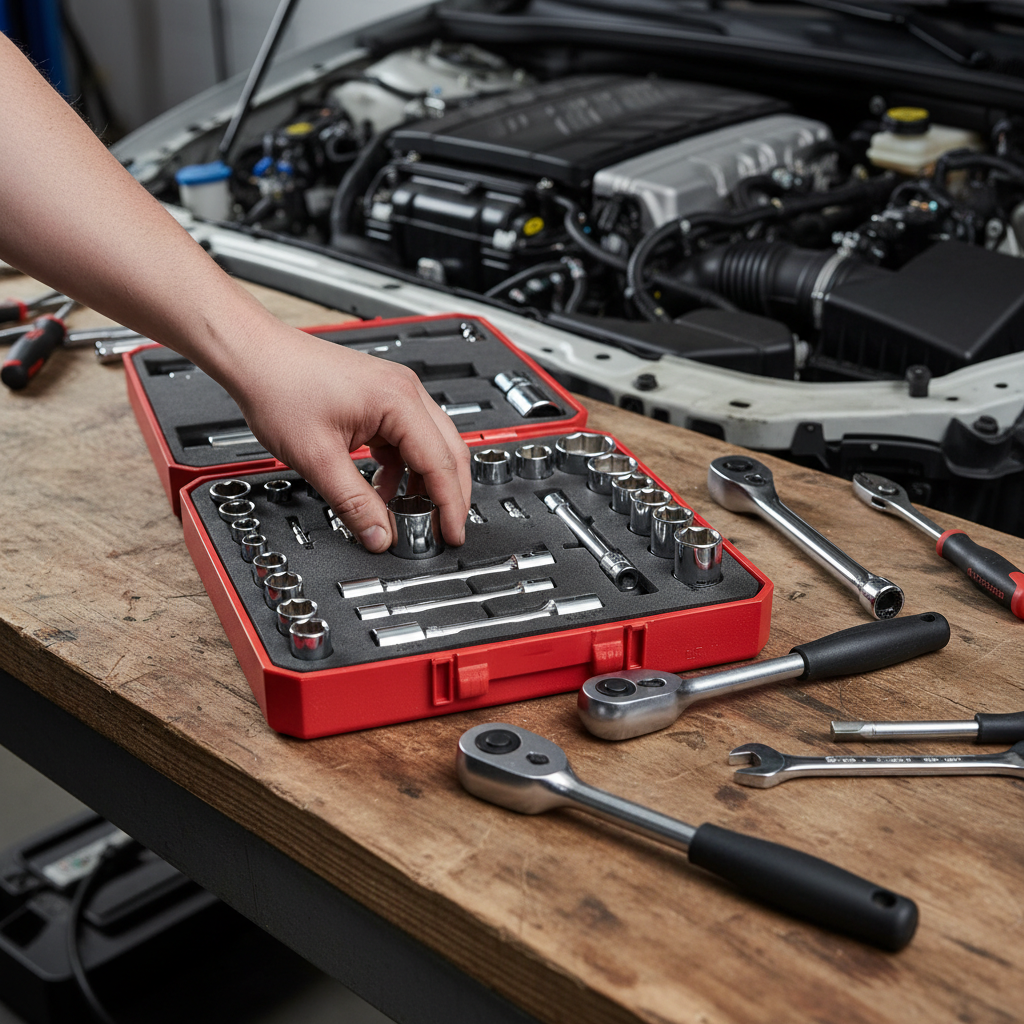
This guide helps you choose by job type, drive size, and key features, plus a quick checklist to figure out what you already own and what you’re missing. I’ll also point out common buying traps, because “more pieces” often means “more duplicates and less usefulness.”
What “best” really means for automotive work
For cars and light trucks, “best” usually comes down to three things: fit, access, and durability. If any one of those is off, the set becomes a drawer ornament.
- Fit: Sockets should seat cleanly without wobble. A sloppy fit increases the chance of rounding a bolt head, especially on rusty hardware.
- Access: You need the right mix of shallow and deep sockets, plus extensions and a universal joint for tight angles.
- Durability: Ratchet teeth, chrome plating, and socket walls need to tolerate repeated use and occasional abuse.
According to SAE International (which publishes widely used automotive engineering standards and technical information), fastener selection and proper tool engagement matter for avoiding damage during service work. In plain terms: the right tool fit helps prevent stripped heads and rework.
Socket set types and which one fits your garage
When people ask for the best socket set for automotive repair, they often mean one of three scenarios. Be honest about yours, it saves money.
General DIY maintenance (brakes, battery, spark plugs)
Most DIYers do best with a 3/8-inch drive metric-focused set plus a few supporting pieces. Modern vehicles in the U.S. still lean heavily metric, even when the badge feels “American.”
- Priority: 8–19 mm coverage, deep and shallow, quality ratchet, a couple extensions
- Nice to have: spark plug sockets, wobble extension, low-profile ratchet
Heavier work (suspension, axle nuts, stubborn fasteners)
Here you want 1/2-inch drive and often impact-rated sockets if you’ll use an impact wrench. Thin chrome sockets can crack under impact use.
- Priority: 10–24 mm (often up to 27–32 mm depending on vehicle), breaker bar, impact sockets
- Nice to have: torque wrench and torque-spec discipline
Compact set for the trunk or track days
A compact kit is about “get me home” coverage. Think lug nuts, battery terminals, hose clamps, a few interior fasteners.
- Priority: small selection of common sizes, strong case, minimal bulk
- Nice to have: bit sockets for interior and undertray screws
Drive sizes: 1/4 vs 3/8 vs 1/2 (and why most people should start at 3/8)
If you buy only one drive size, 3/8-inch is the most versatile for automotive repair. It covers a wide torque range without feeling bulky.
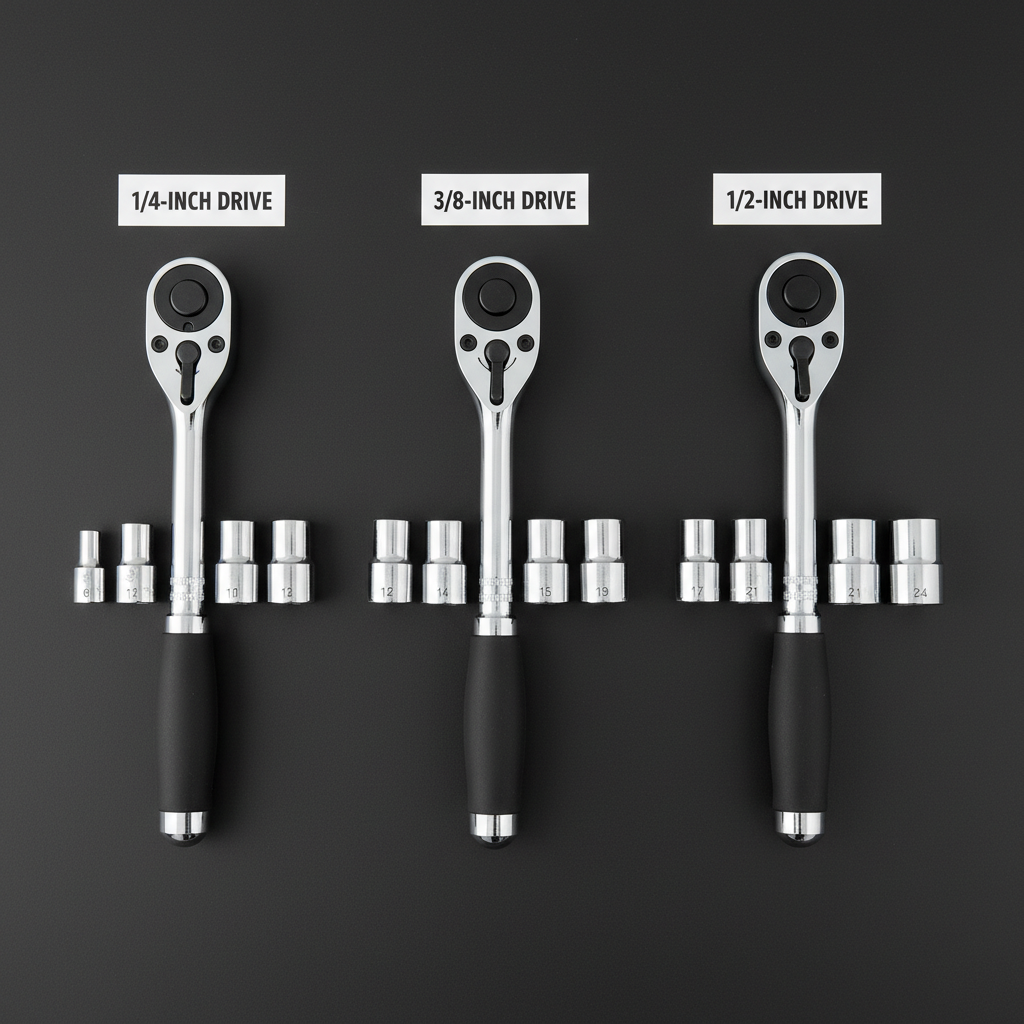
Here’s the quick practical split:
- 1/4-inch drive: interior, hose clamps, small brackets, light engine bay fasteners where space is tight
- 3/8-inch drive: the core automotive size, most engine bay and chassis fasteners you can reach with a ratchet
- 1/2-inch drive: suspension, crank bolts, axle nuts, and anything that makes you think “breaker bar”
One caution: adapters (like 3/8 to 1/2) can help occasionally, but relying on them daily often means the set isn’t matched to the work. Adapters add length and flex, which matters in tight bays.
Size coverage that matters in 2026 (and what’s usually fluff)
Piece count looks impressive, but useful coverage wins. For most U.S. vehicles, metric sizes carry the load.
- Core metric range: 8–19 mm (you’ll reach for 10, 12, 13, 14, 15, 17 constantly)
- Common larger metric: 21, 22, 24 mm for certain suspension and drivetrain tasks
- SAE range: helpful on older vehicles, some domestic platforms, and shop equipment
Fluff often includes: repeated duplicate sockets across multiple trays, lots of rarely used SAE sizes, or a pile of screwdriver bits that pad the number but don’t improve your ability to remove a seized caliper bolt.
Quick self-check: do you need a new set or just a smarter add-on?
Before replacing everything, check what’s actually holding you back. A lot of garages have “almost enough,” just not the right few pieces.
- You frequently can’t reach fasteners without rounding angles, you likely need extensions, wobble extensions, and a universal joint.
- You strip or round bolts more than you’d like, you may need better-fitting 6-point sockets and to stop using worn 12-point sockets on tight fasteners.
- Your ratchet slips under load, that’s often a ratchet mechanism quality issue, not the socket issue.
- You use an impact wrench on chrome sockets, you probably need impact-rated sockets rather than a whole new chrome set.
- You avoid certain jobs because you don’t have large sizes, you may only need a 1/2-inch drive add-on set.
If you check two or more boxes, a new primary kit might be justified. If it’s just one box, a targeted add-on usually saves money.
Buying guide: features that are worth paying for
Some features sound like marketing, others genuinely change the day-to-day experience.
6-point vs 12-point sockets
6-point sockets grip the flats of a bolt head better and tend to be friendlier on rusty fasteners. 12-point can help in tight swing angles, but they’re less forgiving when the bolt head is already compromised. Many people keep both, but lean 6-point for automotive work.
Deep, shallow, and mid-length
Deep sockets matter for studs and recessed nuts, shallow sockets matter where clearance is limited. Mid-length can be a sweet spot, but availability varies by brand.
Ratchet tooth count and back-drag
Higher tooth count usually means smaller swing arc, which helps in tight spots. Back-drag is how much resistance you feel when resetting the ratchet, in cramped areas it can be annoying. If possible, handle the ratchet in person.
Impact vs chrome
Impact sockets are typically thicker and designed for impact tools, chrome sockets are designed for hand tools. Mixing them can be unsafe. According to OSHA, using tools as intended and maintaining them reduces injury risk in workplaces; even for DIY, the same logic applies.
Markings and organization
Laser-etched or stamped size markings that stay readable save real time. A case that keeps sockets in place matters more than most people admit, because lost sockets turn into mismatched sets fast.
Comparison table: choosing the right “best socket set for automotive repair” by scenario
Use this as a shortcut. It’s not brand-specific on purpose, because quality varies even inside the same brand lineup.
| Scenario | Best drive focus | Must-have sockets | Must-have accessories | Skip if budget is tight |
|---|---|---|---|---|
| DIY maintenance | 3/8-inch | Metric 8–19mm, deep + shallow, mostly 6-point | 3" and 6" extensions, universal joint | Huge SAE coverage, oversized bit assortment |
| Suspension/drivetrain | 1/2-inch + impact | Metric 10–24mm plus larger as needed, impact-rated | Breaker bar, torque wrench, long extensions | Extra ratchets you won’t use |
| Compact/travel | 3/8-inch compact | Common metric sizes, a few deep sockets | Short extension, small flex-head ratchet | Full-size 1/2-inch collection |
Practical setup tips: how to build a set that feels complete
If you’re assembling from scratch, this approach tends to work without overspending.
- Start with a quality 3/8-inch metric set (deep and shallow), then add 1/4-inch for tight spaces.
- Add 1/2-inch drive later when you’re ready for suspension or you buy an impact wrench.
- Buy “access” pieces early: wobble extension, universal joint, and a couple extension lengths cover a surprising number of awkward bolts.
- Keep a small fastener rescue kit: bolt extractor sockets and a wire brush, because corrosion is normal, not a rare event.
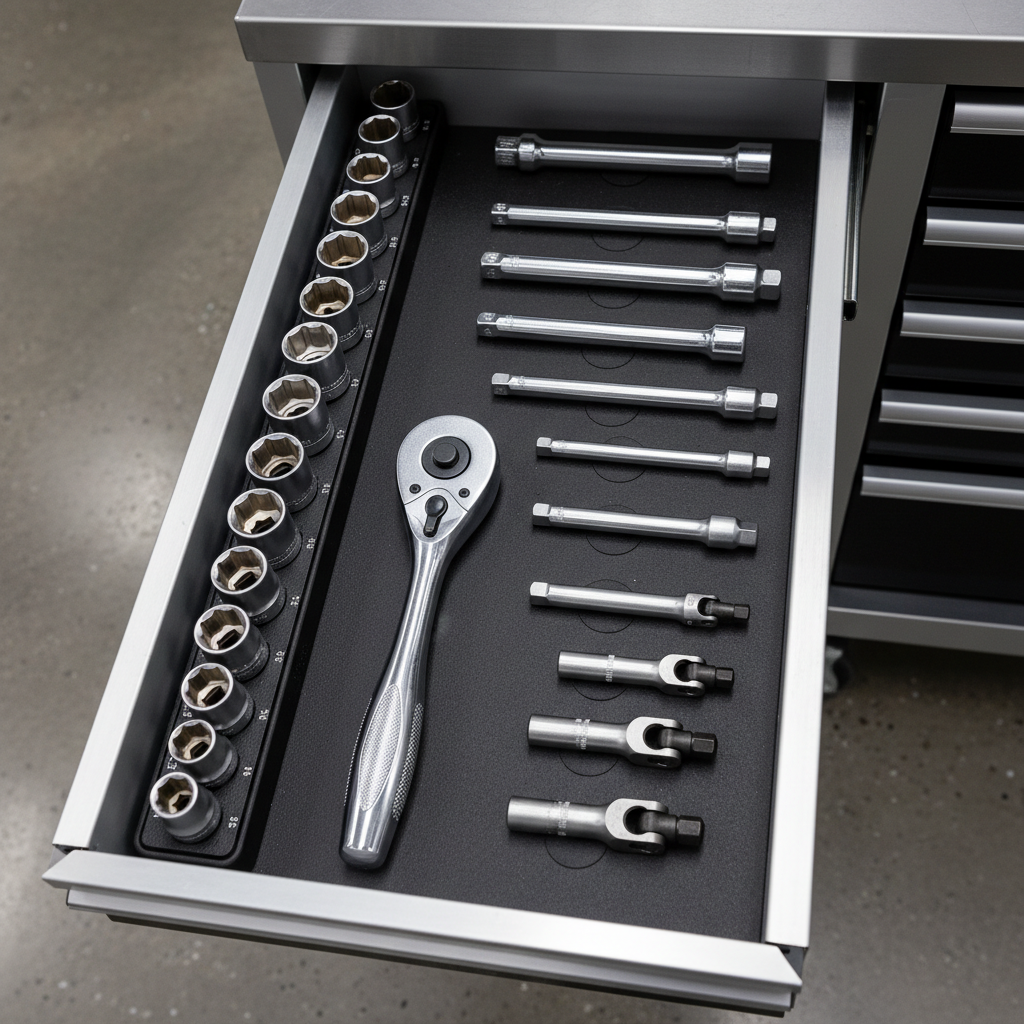
Key takeaway: A “complete” automotive socket setup is often more about access and fit than owning every size ever made.
Common mistakes (and how to avoid wasting money)
- Chasing piece count: A 300-piece kit can still miss the deep sockets you need, or include weak accessories that fail first.
- Overusing 12-point: Great when you need it, but risky on stubborn hardware. Reach for 6-point when torque goes up.
- Using chrome on impacts: This can crack sockets. If you use an impact wrench, keep a separate impact set.
- Ignoring case quality: If the case dumps sockets every time you carry it, you’ll spend more time re-sorting than wrenching.
- Buying all SAE “just in case”: For many newer cars, metric gets most work done. Add SAE later if your vehicle demands it.
When to get professional help (or at least slow down)
If you’re dealing with brake hydraulics, steering components, or high-torque drivetrain fasteners, it’s smart to be cautious. Wrong torque or damaged fasteners can create safety issues, and in some situations it’s reasonable to consult a qualified mechanic.
Also, if a fastener feels like it’s about to snap, stop and reassess. Heat, penetrant, and proper extraction tools can help, but the “right” move depends on vehicle condition and your comfort level.
Conclusion: picking the right set for 2026 without overbuying
The best socket set for automotive repair in 2026 is usually a metric-strong 3/8-inch kit with dependable 6-point sockets, readable markings, and the access pieces that make tight jobs possible. If you also do suspension or own an impact wrench, add a 1/2-inch impact set rather than forcing one kit to do everything.
If you want one action step today, open your current case and list the sizes and tools you reach for most, then buy the missing access pieces before upgrading the whole set. That small move tends to pay off on the very next job.