
Best tool bag for electricians 2026 usually comes down to one thing, how quickly you can get the right tool in your hand without fighting a floppy bag, broken zipper, or a pocket layout that never made sense on a jobsite.
If you work residential service, commercial build-outs, or maintenance, your bag is basically your mobile workbench, when it fails, you lose time, you look scattered, and you risk misplacing small parts where they should never end up.
This guide focuses on what actually matters in 2026, modern tool loadouts, heavier cordless platforms, more meters and testers, more small consumables, and the reality that a “tough” bag can still be annoying to live with.
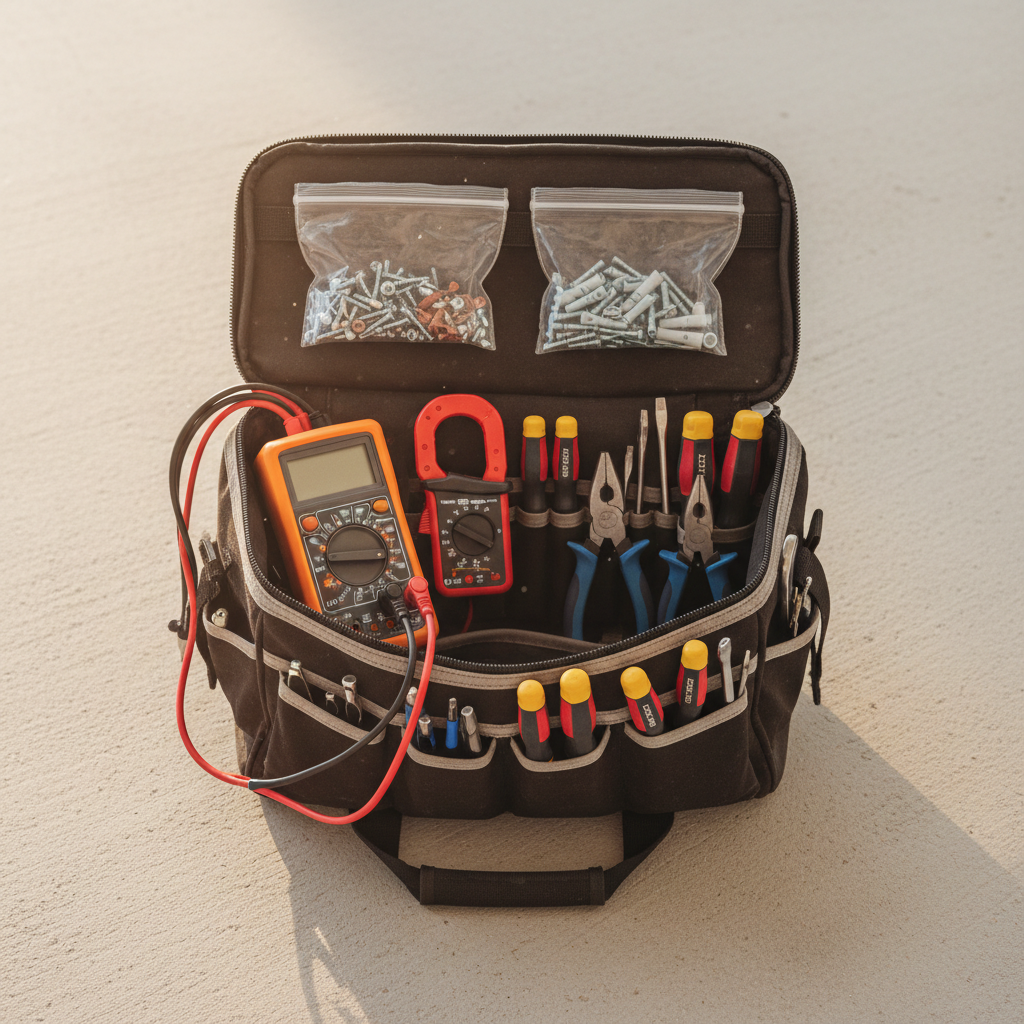
Rather than name one “universal winner”, I’ll help you match bag style to your work, then give a short list of bags worth shortlisting, plus a quick checklist so you can decide fast.
What “best” means for electricians in 2026
People ask for the best tool bag for electricians 2026, but what they usually mean is, “What won’t annoy me every day, and what won’t fall apart in six months?” In practice, the best choice depends on your tool mix, how often you climb ladders, and whether you carry power tools or mainly hand tools.
- Access: wide-mouth opening, structured walls, pockets that stay open, not collapsing into a pile.
- Carry comfort: padded strap, handle that doesn’t bite, backpack straps that don’t slide off.
- Organization: dedicated meter/tester sleeves, bit and driver slots, small parts management that isn’t an afterthought.
- Durability where it counts: base, zipper track, rivets, and strap anchors, not just thick fabric.
- Jobsite practicality: stands upright on uneven surfaces, bright interior, easy to wipe down.
One more nuance, electricians often carry “sharp + heavy” in the same bag, cutters, crimpers, and fasteners next to a meter, so internal dividers and abrasion-resistant lining matter more than many tool categories.
Quick comparison table: bag styles by work type
If you’re trying to decide in five minutes, start here. This isn’t brand-specific, it’s about which format fits your day-to-day.
| Bag style | Best for | Pros | Watch-outs |
|---|---|---|---|
| Open-top tote | Service calls, quick access | Fast grab, stands open, easy sorting | Less weather protection, small parts can spill |
| Structured zip bag | Mixed work, travel, cleaner environments | Better dust control, safer transport | Slow access if pocket layout is tight |
| Backpack | Ladders, long walks, large sites | Hands free, weight distribution | Can become a “black hole” without discipline |
| Rolling tool bag | Big loadouts, warehouse/plant maintenance | Saves your back, huge capacity | Stairs, gravel, truck access can be a pain |
| Modular system (stacking) | Contractors with repeated setups | Scales up, compartmentalizes | Costs add up, bulky in tight service vans |
How to choose: a practical checklist (use this before you buy)
Before you chase a “best tool bag for electricians 2026” list, do a quick self-audit. Most regrets come from buying capacity you don’t need, or buying “compact” and then strapping a second tote on top.
1) Your core loadout
- Do you carry one meter or two testers + a meter (clamp, megger, etc.)?
- Any bulky hand tools: large crimpers, knockout set, fish tape, conduit reamer?
- Do you keep consumables in the bag: wire nuts, Wagos, tape, staples, bushings?
2) How you move
- Lots of ladders or lifts: backpack or compact structured bag usually behaves better.
- Long corridors, big plants: rolling bag can be a sanity saver.
- In-and-out of a van all day: open tote speeds up access, if you control small parts.
3) Your “pain points”
- If you hate digging: prioritize structured opening and bright interior.
- If straps fail: look at stitched + riveted anchors, not just thick webbing.
- If your bag tips over: prioritize wide, reinforced base and low center of gravity.

One extra tip that feels boring but saves money, measure the largest tool you insist on carrying, then compare it to the bag’s internal height, a lot of “pro” bags still have awkward meter sleeves that don’t fit a case.
Features that matter most (and what’s mostly marketing)
In 2026, you’ll see a lot of “1680D ballistic fabric” talk. Fabric matters, but the failure points are usually more specific.
Worth paying for
- Molded or reinforced base: keeps the bag upright and protects meters from impact.
- Quality zipper and track: larger pulls you can grab with gloves, smoother track that doesn’t snag.
- Internal structure: frame or stiff panels so pockets keep shape even when half full.
- Meter/tester protection: padded sleeves or rigid dividers, not just a thin pocket.
- Exterior clip points: tape measure clip, tape loop, carabiner points for keys or ID.
Nice, but don’t overpay
- Too many micro-pockets that only fit one brand’s accessories.
- “Waterproof” claims without sealed zippers, most bags are water-resistant at best.
- Extreme capacity if you already use a cart or keep power tools in the truck.
According to OSHA, employers must provide a workplace free from recognized hazards, and that often translates to practical habits like keeping walkways clear and managing tools to reduce trip hazards, a bag that stays upright and keeps sharp tools contained helps support that kind of everyday safety culture.
Shortlist: tool bags that are commonly strong picks in the US
I can’t promise one bag fits everyone, and “best” can shift as manufacturers refresh lines, but these models tend to show up repeatedly on real jobsites because they solve common electrician problems. Use them as a starting point for your own fit check.
- Klein Tools Tradesman Pro series: often a safe electrician-oriented layout, good pocket mix for hand tools and testers.
- Veto Pro Pac (Tech/MC lines): premium build and structure, especially strong if you care about pocket design and meter carry.
- Milwaukee Packout tool bag options: makes sense if you already run Packout, modular carry can reduce loose “extra bags”.
- DEWALT or Husky structured tool backpacks: commonly available, decent value in many cases, inspect stitching and base design carefully.
- CLC Custom Leathercraft electrician bags: good variety, some models hit a practical middle ground for service work.
If your goal is truly “best tool bag for electricians 2026”, treat this shortlist as brands to compare in person. Pocket geometry and opening angle look similar online, then feel totally different when loaded.
Set up your bag so it stays organized (real-world steps)
Even the best bag turns into a mess if your layout fights your workflow. This setup takes maybe 20 minutes and usually reduces daily frustration immediately.
Step-by-step setup
- Zone 1, fastest access: strippers, linesman pliers, diagonal cutters, 6-in-1 driver, tape measure, marker.
- Zone 2, testing: meter, leads, non-contact tester, small flashlight or headlamp, spare batteries if you use them.
- Zone 3, consumables: one small pouch for connectors and tape, keep it removable so you can restock from the van.
- Zone 4, occasional tools: fish tape, small level, reamer, step bit, put these deeper so they don’t block your main draw.
Keep one “dump pocket” on purpose, people try to eliminate clutter completely, then everything ends up in the same compartment anyway, a single designated pocket for receipts, labels, and odd parts keeps the rest clean.
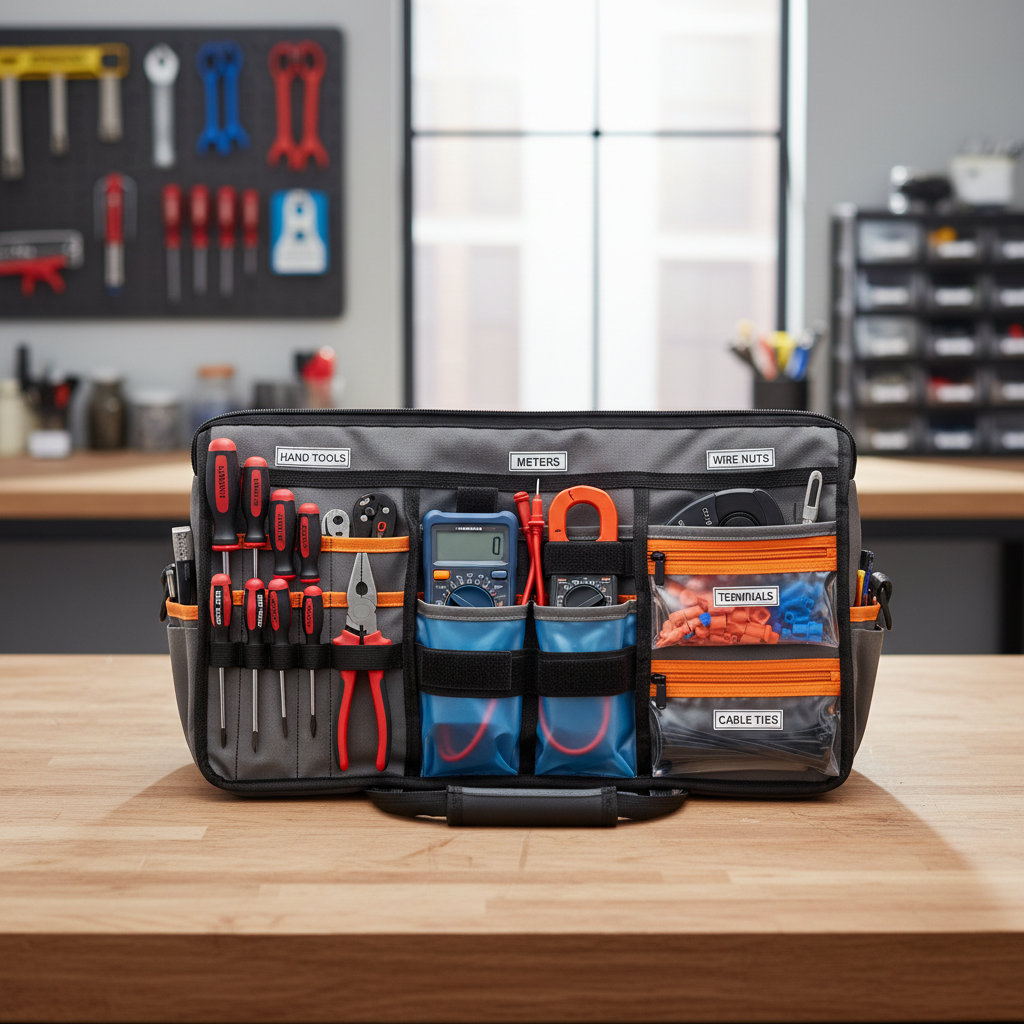
If you do service calls, consider a small, flat zip pouch for common connectors, you can bring it to the panel and leave the main bag staged safely, which also reduces trip risk in tight homes.
Common mistakes that make a “good” bag feel bad
- Overloading: straps and zippers fail faster, and you’ll stop using pockets because it’s too tight to access anything.
- No small-parts system: loose wire nuts and screws migrate into tool pockets, then you jab your hand on sharp edges.
- Ignoring base stability: tippy bags fall over near finished surfaces, then you’re the person leaving marks.
- Buying for “one big job”: a massive bag feels smart during a build-out, then becomes dead weight during routine troubleshooting.
Also, don’t assume “backpack” automatically means comfortable, strap angle and back padding matter, if possible, load it with your actual tools and walk around the store for two minutes.
When it’s worth getting expert input or upgrading strategy
If you’re repeatedly carrying more than you should, or you’re dealing with frequent ladder work, it may be worth asking a supervisor, safety lead, or an experienced foreperson for input on load limits and carry practices, especially if you’ve had strains or close calls. Pain or numbness in shoulders, neck, or hands can have many causes, and it’s smart to consult a medical professional if symptoms persist.
On the gear side, if you keep buying bags and none “work”, the issue may be workflow, not the product. A modular system plus a smaller daily service bag often beats one giant bag that tries to do everything.
Conclusion: picking the right bag without overthinking it
The best tool bag for electricians 2026 is the one that matches your movement pattern, protects your testers, and stays upright and usable when it’s half full. Start with the bag style that fits your day, then validate it with the checklist, especially base stability and meter carry.
Key takeaways you can act on this week:
- Choose format first, tote, structured zip, backpack, rolling, then compare models.
- Prioritize base, zipper quality, and internal structure over raw pocket count.
- Set up simple zones and a removable consumables pouch, it keeps the bag from turning into a bin.
If you’re shopping soon, bring your largest meter and your top five hand tools to test fit, that one step prevents most “I thought it would work” returns.