
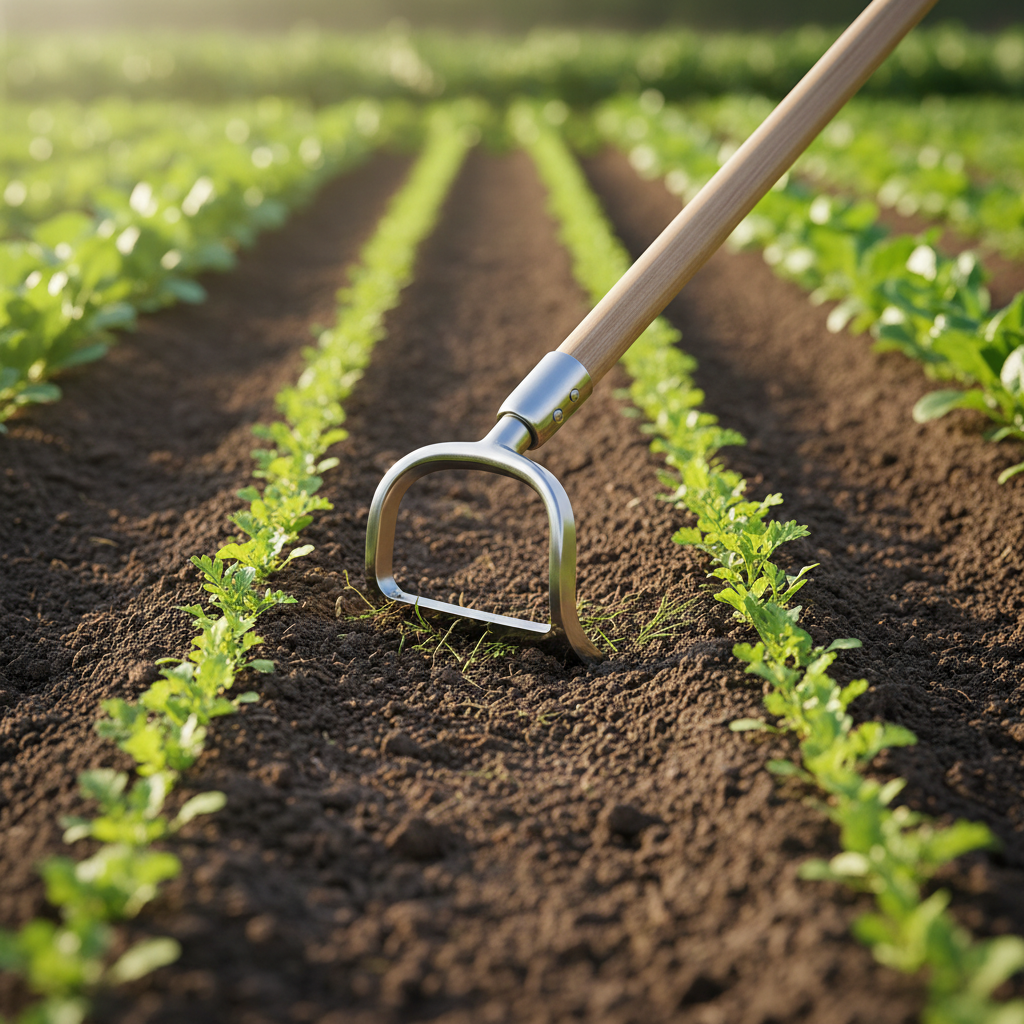
Garden hoe stirrup action tools are built for one job: slicing weeds just under the soil surface with a push-pull motion, without the heavy chopping that wears out wrists and backs.
If you have beds that look clean after you weed, then explode again a week later, this style of hoe can feel like cheating, in a good way. It works best when weeds are small and the soil is reasonably loose, which is exactly when most people are tempted to “do it later.”
This guide breaks down how a stirrup (also called a scuffle) hoe works, how to pick the right one for your garden, and how to use it so you actually save time instead of just scratching up the top layer.
Why a stirrup action hoe feels different (and when it shines)
A classic draw hoe works by chopping and pulling soil, which is useful for shaping rows and hilling. A stirrup hoe is more like a razor on a frame, it glides and cuts weed stems at the crown with less force.
It tends to shine in these situations:
- Frequent “maintenance weeding” in veggie beds, paths, and wide rows
- Young weeds (thread stage to a few inches tall)
- Dry-to-lightly-moist topsoil, where the blade can skim cleanly
- Mulch-free zones or lightly mulched beds where the blade can reach soil
But there are limits. In heavy clay after rain, the blade may clog, and in rocky soil it can snag hard enough to ruin your rhythm. For deep-rooted perennials, you’ll still want a digging tool or targeted removal.
How the stirrup blade actually works
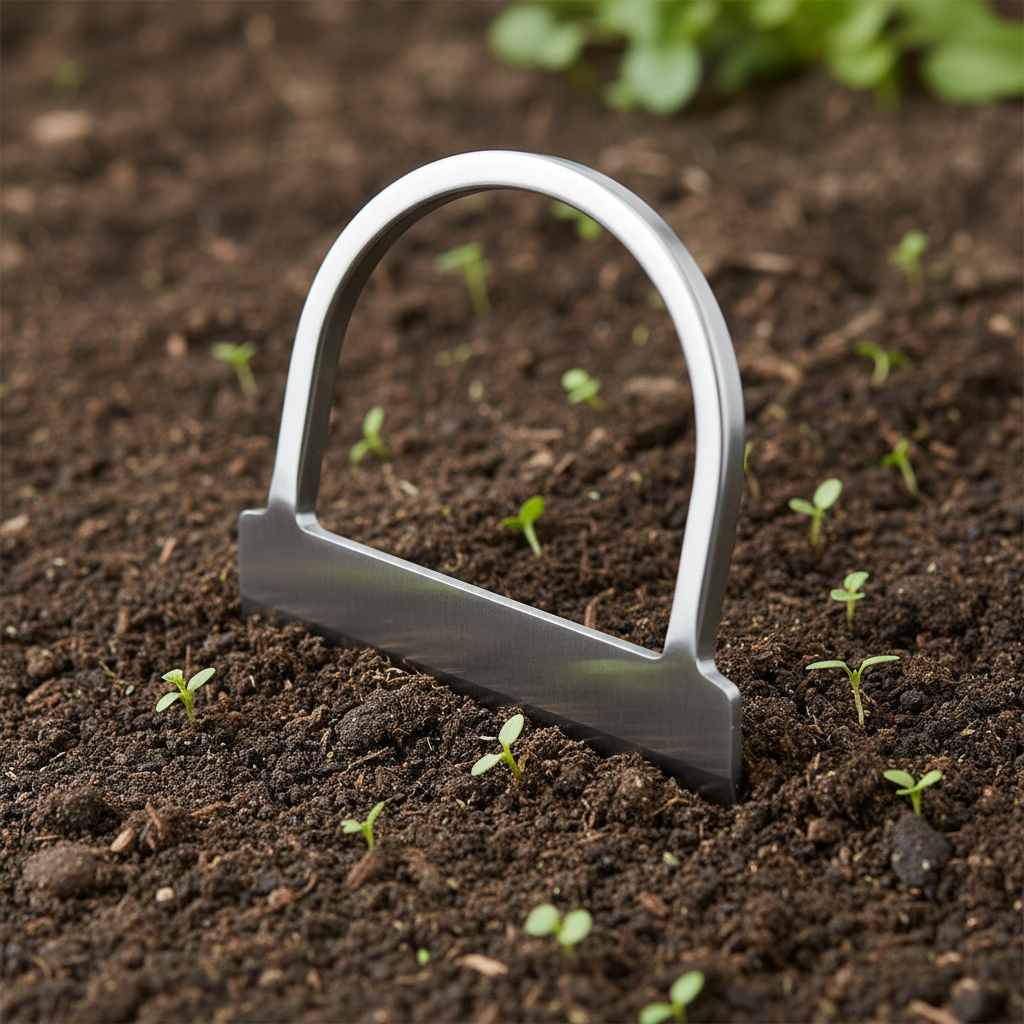
The loop-shaped head holds a flat blade that’s sharp on one or both sides. As you push and pull, the blade stays near-parallel to the ground, slicing weeds right below the surface so the tops wilt fast.
Two small details decide whether it feels effortless or annoying:
- Blade angle: Too steep and you dig trenches, too flat and you skate over weeds.
- Depth control: Most weeding succeeds at 0.25–1 inch deep, deeper usually just brings up new weed seeds.
According to University of California Agriculture and Natural Resources (UC ANR)... regular shallow cultivation can reduce annual weeds when timed early, before weeds mature and set seed.
Quick self-check: is this the right hoe for your garden?
If you’re unsure, this quick checklist usually makes it obvious. A stirrup hoe is a good fit if most of these are true:
- You weed often, even if it’s only 10 minutes at a time
- Your weeds are mostly annuals (crabgrass seedlings, chickweed, purslane, etc.)
- You have beds with space to swing (not a tight jungle of stems)
- You can time weeding when soil is not sticky
You may want a different tool (or a second tool) if:
- You’re battling established perennials, thick taproots, or woody crowns
- Your beds are packed with drip lines, landscape fabric staples, or stones
- You mainly weed in very tight spaces, like around crowns of transplants
Choosing the right stirrup action garden hoe (size, handle, and build)
Most buying mistakes come down to size mismatch. Wider heads cover ground faster, but they also need more clearance and can feel clumsy between close plantings.
What to look for
- Head width: 3–5 inches for tight beds, 6–8 inches for open rows, 8+ inches for paths and big areas.
- Blade type: Fixed blades feel solid; oscillating blades pivot slightly and can be forgiving if your angle changes.
- Replaceable blade: Helpful if you garden a lot or hit rocks.
- Handle length: Longer handles help taller gardeners stay upright, shorter handles give control in smaller beds.
- Grip and balance: If it feels tip-heavy in the store, it will feel worse after 15 minutes.
Comparison table (practical, not perfect)
| Option | Best for | Trade-offs |
|---|---|---|
| Fixed-blade stirrup hoe | Steady, controlled slicing in beds | Angle control matters more |
| Oscillating stirrup hoe | Fast push-pull weeding with less “perfect” form | Can chatter in rocky soil |
| Narrow head (3–5 in.) | Between plants, tight rows | Slower coverage on paths |
| Wide head (6–8+ in.) | Long rows, larger weed patches | Needs more clearance, can nick crops |
How to use a stirrup hoe so it actually saves time
The “secret” is that you’re not digging, you’re shaving. A lot of frustration comes from trying to muscle it like a chopping hoe.
Step-by-step technique
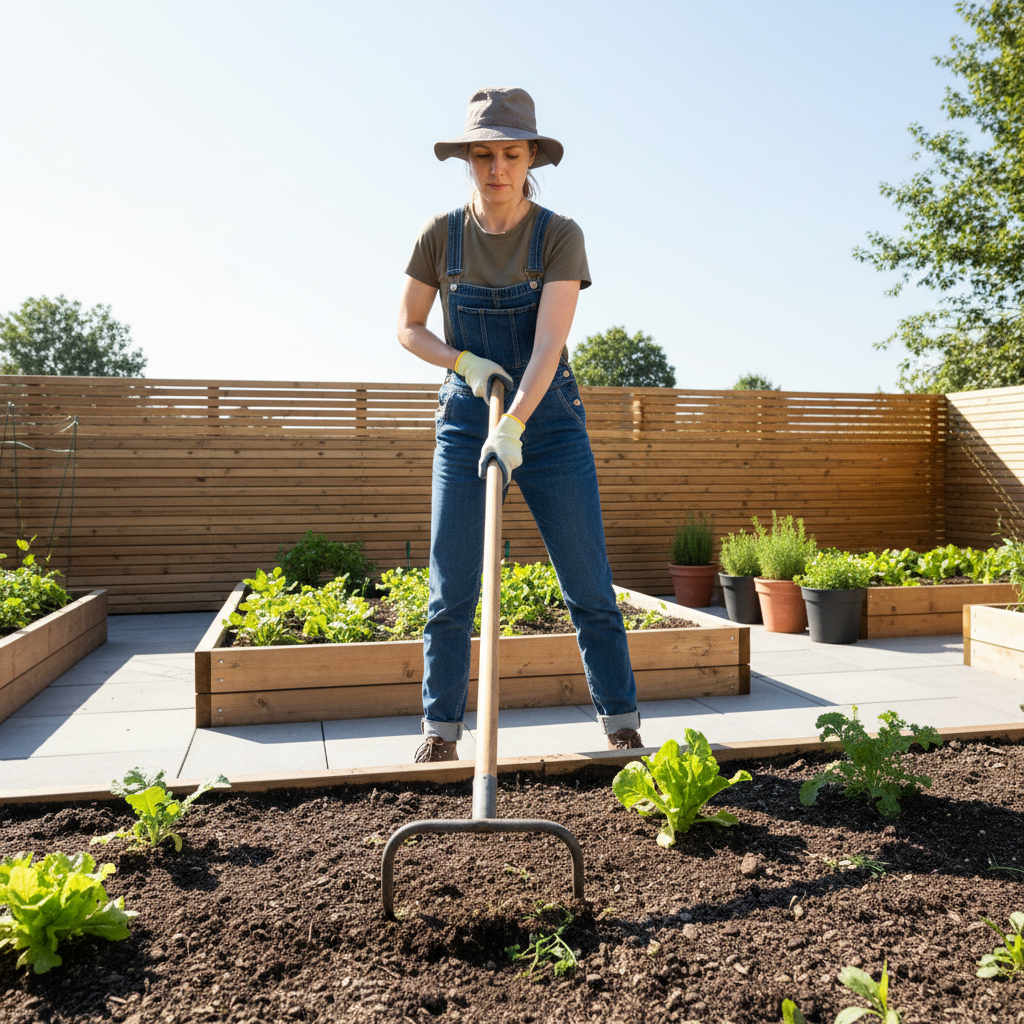
- Set your stance: Stand upright, elbows relaxed, hands spaced comfortably.
- Find the depth: Start shallow, then go slightly deeper only if weeds survive the pass.
- Push-pull in short strokes: Think 6–12 inches, especially near crops.
- Work with dry-ish soil: If soil sticks to the blade, pause and come back later if you can.
- Follow up smart: On sunny, dry days, leave cut weeds on top to desiccate; if it’s wet, you may want to rake them off so they don’t re-root.
According to USDA Natural Resources Conservation Service (NRCS)... minimizing aggressive soil disturbance helps maintain soil structure; shallow cultivation tends to be gentler than deep, repeated tillage.
Common mistakes (and small fixes that matter)
Most people quit on a stirrup hoe because of one of these issues, and they’re usually fixable in minutes.
- Going too deep: You get tired, you bring up new seeds. Fix: back off and aim for a shallow skim.
- Weeding too late: Thick weeds resist slicing and may re-sprout. Fix: shorter, more frequent sessions.
- Wrong timing on moisture: Mud sticks, dry concrete soil bounces. Fix: aim for “crumbly,” often a day after watering or rain.
- Blade is dull: A dull edge tears instead of cuts. Fix: touch up with a file, keeping the bevel consistent.
- Too-wide head in tight beds: You clip seedlings and feel clumsy. Fix: switch to a narrower head or use hand tools near crowns.
Key point: the tool is fast when you treat weeding like routine maintenance, not a rescue mission.
Safety, care, and when to get extra help
The blade can be sharp enough to cut skin, and the looping frame can catch toes if you work too close. Closed-toe shoes and gloves are a sensible baseline, and if you have back or joint concerns, it may be worth asking a healthcare professional about safe movement and limits.
For maintenance, a quick routine keeps the garden hoe stirrup action feel smooth:
- Wipe soil off after use, especially if you garden in wet conditions
- Lightly oil metal parts to reduce rust, storage in a dry spot helps
- Sharpen with a file when it starts to drag, not after it becomes frustrating
- Check handle tightness, wobble wastes energy and can lead to slips
If weeds keep winning despite good technique, it may not be the tool, it may be the system. Consider talking with a local extension office about weed identification and timing in your region. According to USDA Cooperative Extension programs... local guidance often improves results because weed pressure and seasons vary a lot by area.
Conclusion: a realistic way to keep beds clean with less effort
A stirrup hoe is not a magic wand, but it is one of the few tools that can make weeding feel quick and repeatable. If you pair garden hoe stirrup action technique with good timing, shallow passes, and a blade that stays sharp, you’ll usually spend less time fighting weeds and more time planting and harvesting.
If you want one simple next step, pick a dry morning this week and do a 10-minute shallow pass in your worst bed, then repeat in 5–7 days. That small rhythm is where this tool pays off.
FAQ
What is a stirrup hoe used for in a vegetable garden?
It’s mainly for slicing small weeds just below the surface between rows and around established plants, especially when you can weed regularly before weeds get tough.
Does a stirrup hoe work in clay soil?
It can, but performance depends on moisture. When clay is sticky, the blade may clog and smear. Many gardeners get better results waiting until the surface dries to a crumbly texture.
How often should I use a scuffle hoe for weed control?
Many gardens respond well to short, frequent sessions, often weekly during peak growth. The exact cadence varies by weather and how quickly weeds germinate in your beds.
Should the stirrup hoe blade be sharp?
Yes, sharper blades slice with less effort and disturb less soil. You don’t need a razor edge, but if you feel tearing or dragging, a quick file touch-up usually helps.
What’s the difference between an oscillating hoe and a fixed stirrup hoe?
Oscillating designs pivot slightly, which can feel smoother if your angle changes during the push-pull motion. Fixed heads feel more direct and controlled, but they reward consistent depth and angle.
Will a stirrup hoe remove weeds with deep roots?
It often removes the tops and can weaken some weeds over time, but deep-rooted perennials frequently require digging out the crown or using other targeted methods.
Can I use a stirrup hoe around drip irrigation lines?
You can, but it takes care. Work shallow, slow down near tubing, and consider switching to a narrow head or hand weeding right next to emitters to avoid accidental cuts.
If you’re building a low-maintenance weeding routine, a stirrup hoe is a practical “workhorse” tool to add, and if you’d rather keep it even simpler, pairing it with mulch strategies and a realistic weekly schedule often reduces how much you need to weed in the first place.