
loppers branch cutter heavy is the phrase people end up searching after a frustrating afternoon, you squeeze hard, the jaws slip, and the branch crushes instead of snapping clean.
If you prune trees even a few times a year, heavy-duty loppers are one of those tools that either feel like a cheat code or a constant fight, and the difference usually comes down to blade type, leverage design, and whether you’re asking the tool to do a small saw’s job.
This guide helps you pick the right style for your trees, spot the common “wrong tool or wrong technique” moments, and set up a simple routine so your cuts look cleaner and your hands feel better afterward.
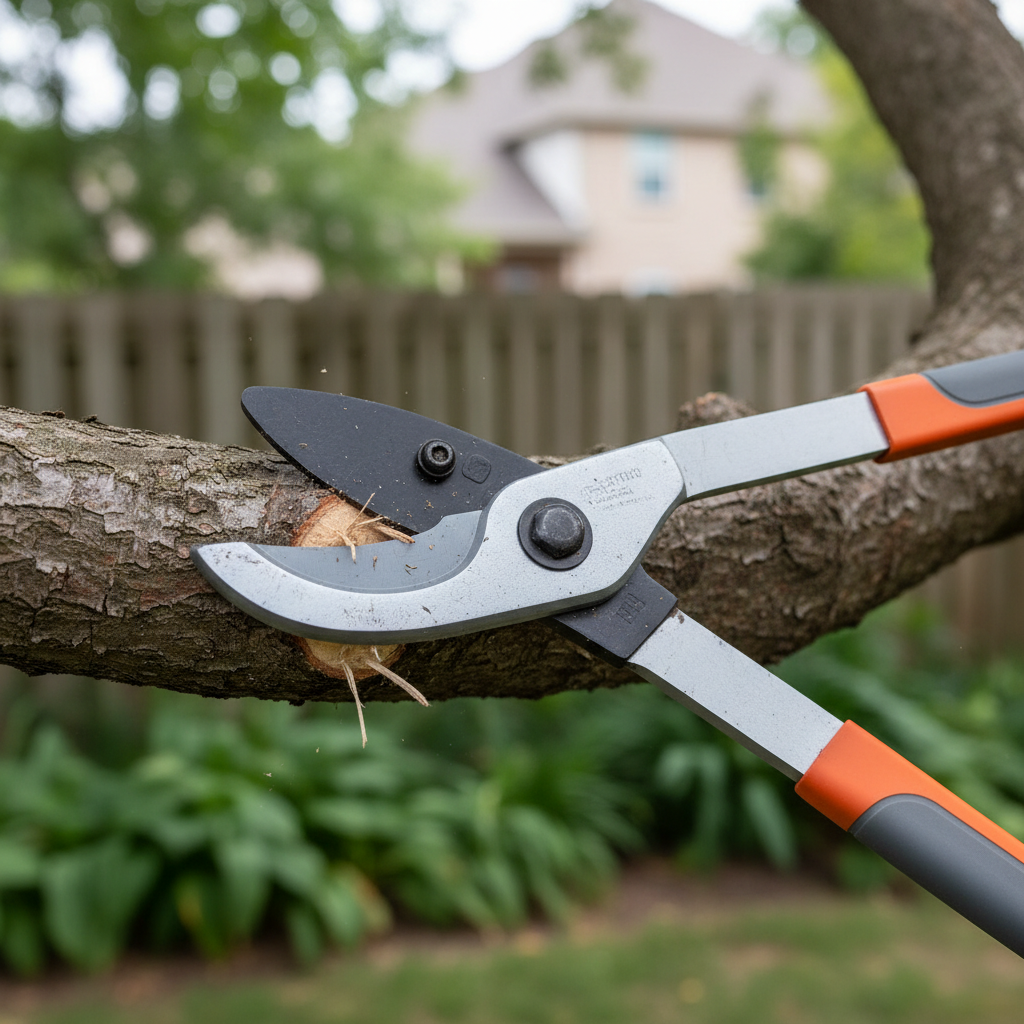
Why heavy-duty loppers struggle on trees (and when it’s not your fault)
Most “these loppers are terrible” complaints come from a mismatch between branch size, wood type, and cutting mechanism, not just tool quality.
- Branch diameter is too large: many loppers feel strong but realistically handle around 1 to 2 inches depending on species, dryness, and leverage design.
- Hardwood vs softwood: oak, hickory, and mature fruit wood often need more force than pine or young growth, even at the same diameter.
- Dull blade or nicked edge: once the edge rolls, the tool starts crushing fibers, that “chewed” look is the giveaway.
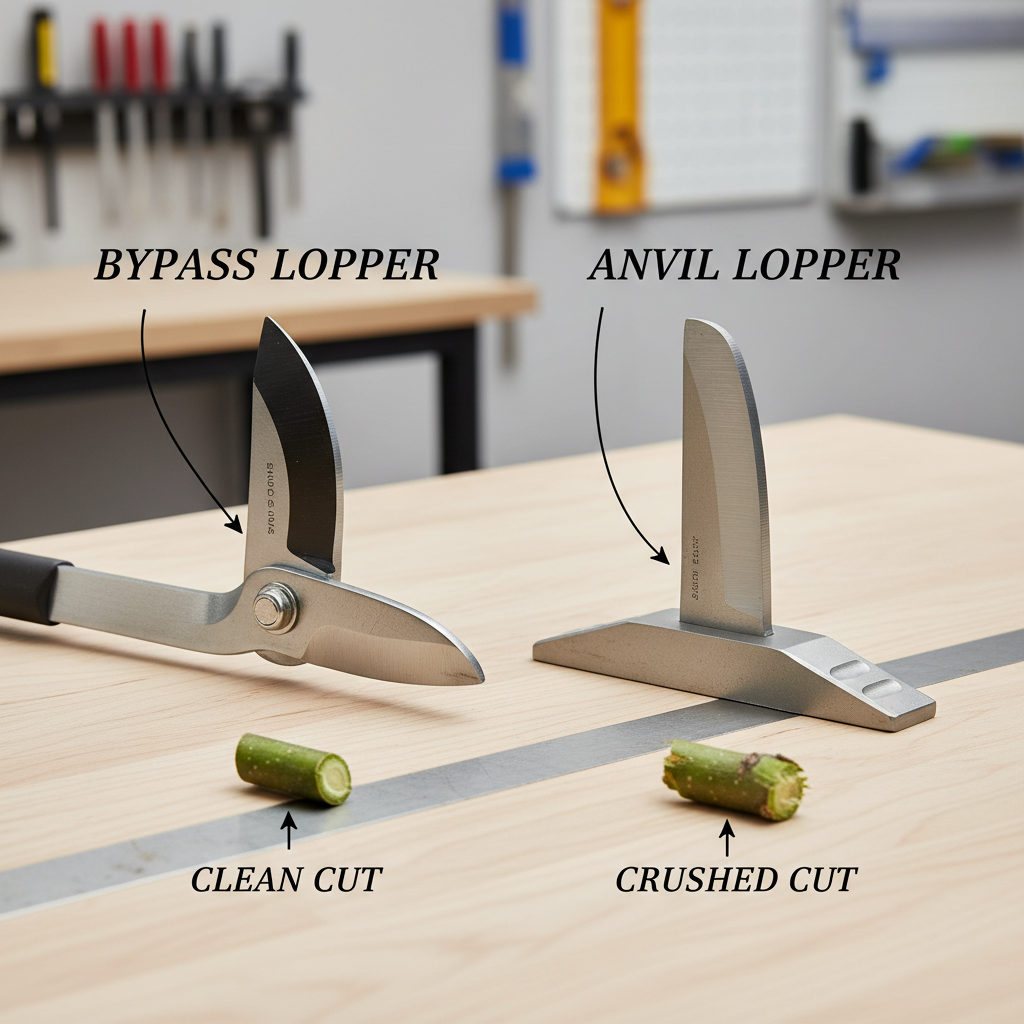
- Wrong blade style: anvil models can crush living wood, bypass models usually cut cleaner for green branches.
- Bad body position: if you’re cutting above shoulder height, your leverage disappears, and you compensate by twisting the tool.
According to OSHA, hand tools should be kept sharp and maintained because dull cutting edges increase force and raise the chance of slips, which is exactly what happens when lopper jaws bind mid-cut.
Quick self-check: are heavy loppers the right tool for your job?
Before buying a bigger set, do a fast reality check. It saves money, and it saves your wrists.
- Most branches you cut are under 1.5 inches, and the wood is green: heavy-duty bypass loppers usually make sense.
- You often face 2-inch-plus limbs, or dead wood: you may be better with a pruning saw, or a small chainsaw if you’re trained and comfortable.
- Cuts look torn or crushed even on smaller branches: likely blade condition or wrong blade type.
- You need reach more than power: a pole pruner might beat longer loppers, because overhead cutting with long handles often feels awkward.
- You care about tree health and clean cuts: bypass blades tend to be the safer default for living branches.
Rule of thumb: if you’re regularly forcing the handles with your body weight, the tool is telling you it’s out of its comfort zone.
Choosing the right heavy branch cutter loppers: what matters in real use
Shopping for tree loppers gets noisy fast, lots of “cuts 2 inches!” claims, not enough context. Here are the features that usually matter more than marketing.
Bypass vs anvil (this choice affects cut quality)
- Bypass: one sharp blade passes a hook counter-blade, like scissors, typically cleaner for live branches and pruning for plant health.
- Anvil: a sharp blade closes onto a flat anvil, often better for dead, dry branches, but can crush green tissue.
Leverage system: compound action vs long handles
- Compound action adds mechanical advantage, it feels “easier” on thicker wood but can be slower per cut.
- Long handles give leverage and reach, but too long can become clumsy in dense canopies.
Blade material and replaceability
- Hardened steel holds an edge longer, coatings can reduce sap sticking, but coating cannot fix bad steel.
- Replaceable blades matter if you prune often, one accidental cut into hidden wire can ruin a season.
Grip and shock control
If you do a lot of cuts in one session, look for grips that stay comfortable when sweaty and a design that does not “snap” harshly at the end of the cut.
Comparison table: picking a lopper style by scenario
Use this as a starting point, then adjust for your tree species and how often you prune.
| Scenario | Recommended lopper type | Why it works | Watch out for |
|---|---|---|---|
| Live branches on shade trees, general pruning | Heavy-duty bypass | Cleaner cuts, less crushing on green wood | Do not force on oversized limbs |
| Dead wood cleanup, brittle limbs | Anvil or bypass with sharp blade | Anvil can power through dry fiber | Can pinch and splinter on some cuts |
| Thick limbs near the loppers’ limit | Compound-action bypass | More mechanical advantage | More moving parts, keep it clean |
| Overhead pruning for clearance | Pole pruner (not loppers) | Safer angle, better reach | Fatigue, falling debris risk |
| 2–4 inch branches, occasional work | Pruning saw | Cleaner, lower effort than forcing loppers | Needs stable stance and patience |
How to use heavy loppers on trees for clean, fast cuts
Technique matters more than most people expect, especially when your loppers branch cutter heavy setup is close to its cutting limit.
1) Position the branch deep in the jaws
Cut near the pivot point, not at the tip of the blade, you get more force and less twisting.
2) Aim for a single decisive close
Repeated half-squeezes chew the bark. If you cannot close in one smooth motion, switch tools or reduce the branch with a saw first.
3) Support the branch if it can tear
For longer limbs, a small undercut with a saw can prevent bark ripping, especially on ornamentals where appearance matters.
4) Mind the branch collar
Cut just outside the swollen collar at the base of the branch, it helps the tree seal the wound more naturally. According to the USDA Forest Service, proper pruning cuts avoid flush cuts and protect the branch collar to support wound closure.
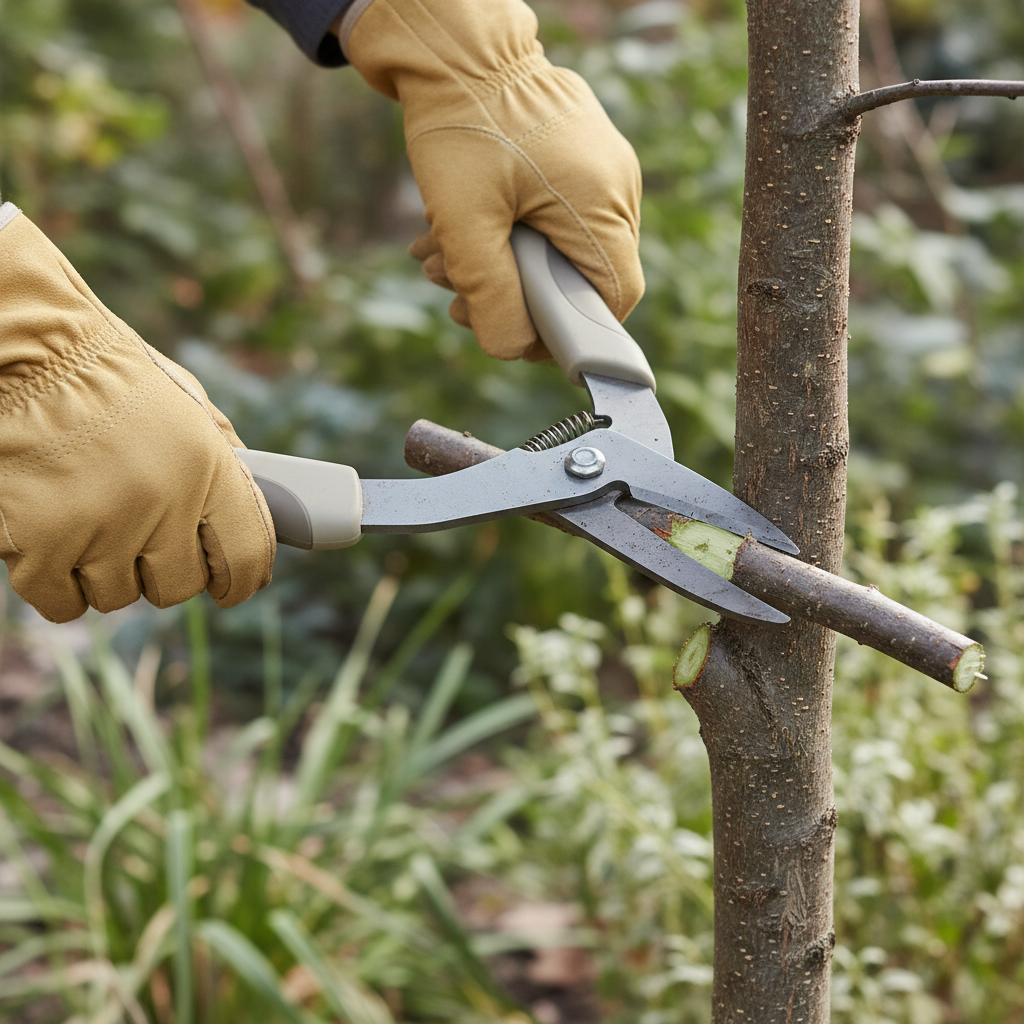
Maintenance that actually keeps heavy loppers feeling “powerful”
Most heavy-duty loppers do not “wear out” quickly, they get dirty, misaligned, or dull, and then people replace them early.
- Clean sap often: wipe blades with a resin remover or rubbing alcohol, then dry, sticky buildup increases friction and hand force.
- Sharpen lightly, more often: a few passes with a file or stone beats aggressive grinding once a year.
- Check the pivot bolt: too tight binds, too loose twists, adjust until the action feels smooth with no side play.
- Oil the pivot: one drop of light oil keeps compound mechanisms from feeling “gritty.”
- Watch for blade alignment: bypass blades should pass close, not gap wide, a bent hook or loose hardware causes tearing.
If you cut diseased branches, disinfecting tools between cuts may reduce spread. Many extensions and university programs mention this practice, though exact recommendations vary by pathogen, when in doubt, ask a local extension office.
Safety and common mistakes (the stuff people learn the hard way)
Tree work looks calm until it doesn’t, even with hand tools. A “small” branch can whip, drop, or roll when the fibers finally give.
- Wear eye protection: chips and spring-back are common, especially on dry wood.
- Do not cut above shoulder height: control drops fast, use a pole pruner or reposition.
- Do not twist to finish a cut: twisting can snap blades or send your hand into the branch.
- Avoid ladders for reach cuts: if you must use one, consider professional help, falls are the bigger risk than the tool itself.
- Skip “flush cuts”: cutting too close harms healing tissue and can invite decay.
According to CDC, using appropriate protective equipment helps reduce injury risk during yard and garden tasks, even basic eye protection makes a difference when cutting branches that can recoil.
When to bring in a pro (and when to switch tools)
If you’re repeatedly hitting the limit of a heavy branch cutter, the answer usually is not “stronger hands,” it’s a different tool or a safer plan.
- Large limbs over structures: roofs, fences, power lines, even if the cut seems simple, the drop zone can turn risky.
- Branches higher than you can reach from the ground without stretching, unstable cutting angles add risk.
- Signs of tree stress: major cracks, hanging limbs, decay pockets, or a tree that already leans, an arborist can judge load and failure risk.
- You need major pruning for health: structural cuts on young trees and corrective pruning often benefit from trained eyes.
Many homeowners use loppers for routine maintenance and switch to a pruning saw for thicker wood. For hazardous trees or any job near electrical lines, contacting a certified arborist or your utility provider is usually the safer call.
Key takeaways before you buy or upgrade
- Bypass loppers are the go-to for living branches, anvil styles often fit deadwood cleanup.
- When cuts crush or tear, suspect blade sharpness, alignment, or branch size, not just “lack of power.”
- Forcing loppers on oversized limbs costs time and can stress the tree, a pruning saw often feels easier and cleaner.
- Good technique, deep jaw placement and stable body position, can make a mid-range tool feel dramatically better.
If you want the simplest next step, pick one realistic diameter range for your yard, then buy around that, not around the biggest claim on the package.
FAQ
What size branch can heavy-duty loppers cut on most trees?
It varies by wood type and lopper design, but many people get consistent, clean cuts around 1 to 2 inches on green wood. If you’re near 2 inches on hardwood, a compound mechanism or a pruning saw often feels more predictable.
Are bypass loppers better than anvil loppers for tree pruning?
For living branches, bypass models usually leave a cleaner cut, which many gardeners prefer for tree health. Anvil styles can be handy for dead, brittle limbs where crushing is less of a concern.
Why do my loppers leave crushed, ragged cuts?
Most often it’s a dull edge, sap buildup, or a branch that’s too thick for the tool. Also check jaw alignment, if the blade and hook are not tracking closely, the tool tends to tear fibers instead of slicing them.
Do longer handles always mean more cutting power?
Longer handles increase leverage, but they also increase wobble in tight spaces and can be awkward overhead. Many homeowners prefer moderate length plus a compound action for thicker branches.
Is it okay to cut tree branches with loppers above my head?
It’s possible, but it’s not ideal, control drops and debris can fall into your face. If you must reach, a pole pruner from a stable stance is usually safer than stretching heavy loppers.
How often should I sharpen lopper blades?
If you prune regularly, light sharpening a few times per season keeps cuts clean and reduces hand force. If you notice you’re squeezing harder than usual or the cut looks crushed, it’s time.
Should I disinfect loppers between trees?
In many situations it’s a reasonable precaution, especially when you suspect disease. Specific guidance can depend on the pathogen and the plant, so checking a local cooperative extension resource can help you avoid overdoing it or using the wrong product.
When should I stop using loppers and switch to a saw?
If the handles won’t close smoothly, or you’re rocking your whole body to finish the cut, switch. A pruning saw is often faster on thick limbs and usually leaves a cleaner surface than forced lopper cuts.
If you’re trying to choose a loppers branch cutter heavy setup that fits your yard, it helps to list your most common branch sizes and tree types, then match blade style and leverage to that reality, you’ll prune faster, with cleaner cuts, and less frustration.